An emergency kit is not a matter of doom thinking, but of thinking ahead a little. The power goes out, the tap water is off for a while, you are stranded at the roadside or the road is impassable because of the weather. In situations like these it helps a lot if you do not have to go searching for water, light and a way to stay warm. An emergency kit is exactly that: a fixed set of items you keep ready, so you can look after yourself for the first hours or days.
In this overview we keep it calm and practical. First we look at the basis that belongs in every emergency kit, then at the three places where such a kit makes sense: in the car, for 72 hours and at home. Finally we discuss how to keep your kit up to date, because an emergency kit you forget about does not work when it matters. For the parts that deserve more detail, we point to separate overviews so this piece stays clear.
Good to know
This article is meant to be informative and educational. The medical parts do not replace professional help or a first aid course. In a real emergency, always call 112. The preparations mentioned are general guidelines; tune them to your own situation and household.
Why an emergency kit: calm, no doom thinking
The thinking behind an emergency kit is simple: most disruptions are temporary and manageable, but the first hours in particular can be unpleasant if you have nothing on hand. A longer power cut, a fault in the water supply, extreme weather or trouble on the road are realistic situations where it is good to be able to look after yourself without immediately depending on others.
So an emergency kit is not about the worst-case scenario, but about the ordinary bumps: no power for a while, no tap water for a while, not being able to move on for a while. By keeping a fixed set of items ready, you do not have to think or improvise at such a moment. That is the core: preparation makes an awkward situation manageable.
The basis that belongs in every emergency kit

Whether you put together a kit for the car, for 72 hours or for the home, the basis is always the same. The difference is mainly in the quantity and in a few place-specific additions. Below we walk through the basic categories so you have a clear starting point; the exact contents you work out per kit.
Water and food
Water is the most important item. For drinking and basic hygiene, count on plenty of water per person per day, and bear in mind that you cannot always refill it. Besides bottles of water it is handy to have a way to carry or transport water, for example a foldable carrier or a water bladder. How much water to keep exactly and how to carry it is covered in the overview about carrying water along the way.
For food you choose shelf-stable products that need no cooling or preparation and that you simply eat and replace now and then. Think of things that keep for a long time and that your household actually likes. That way your supply stays fresh and you throw nothing away. The rest of the water carriers and bottles are at the water bottles and carriers.
First aid and medical
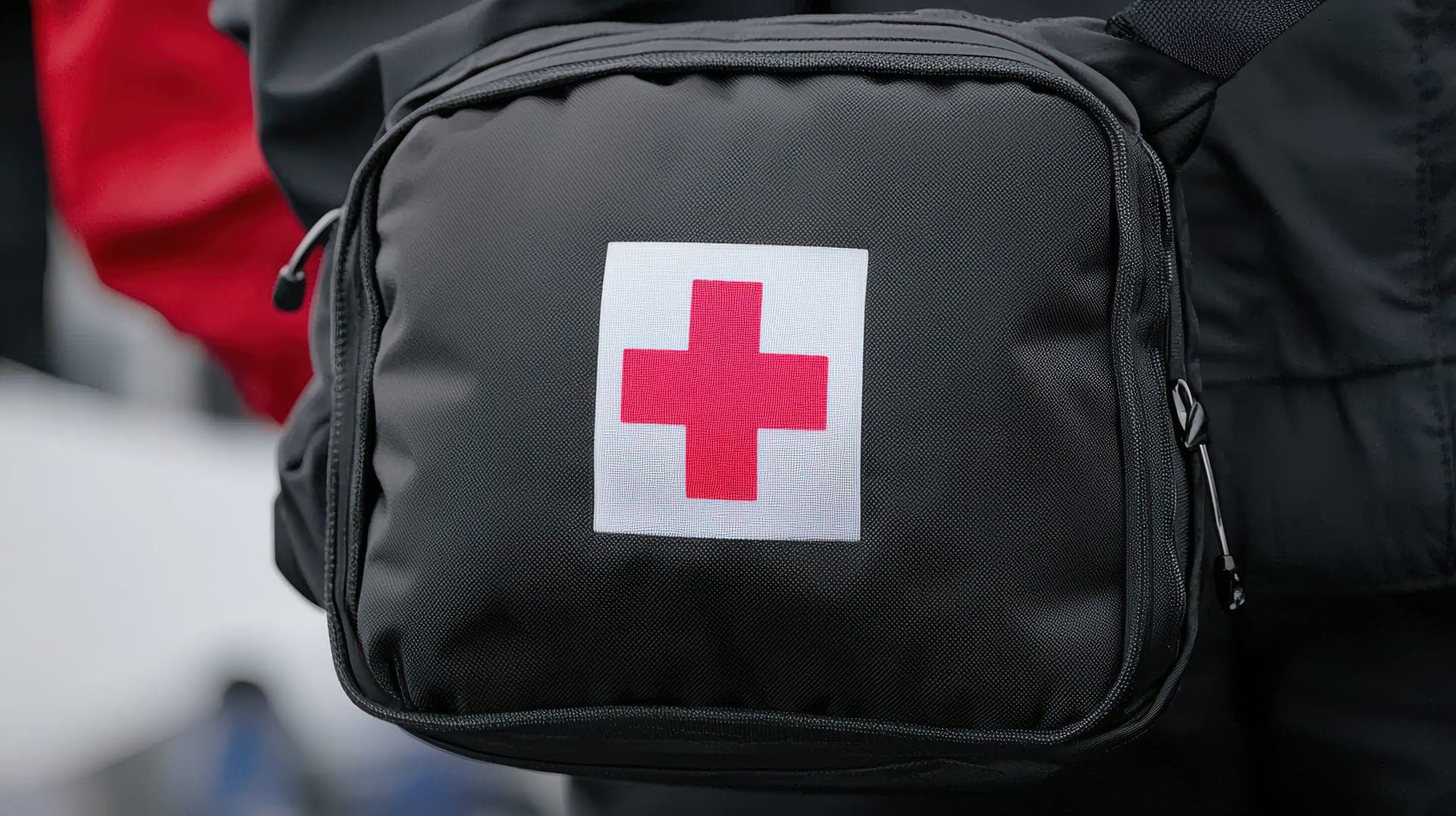
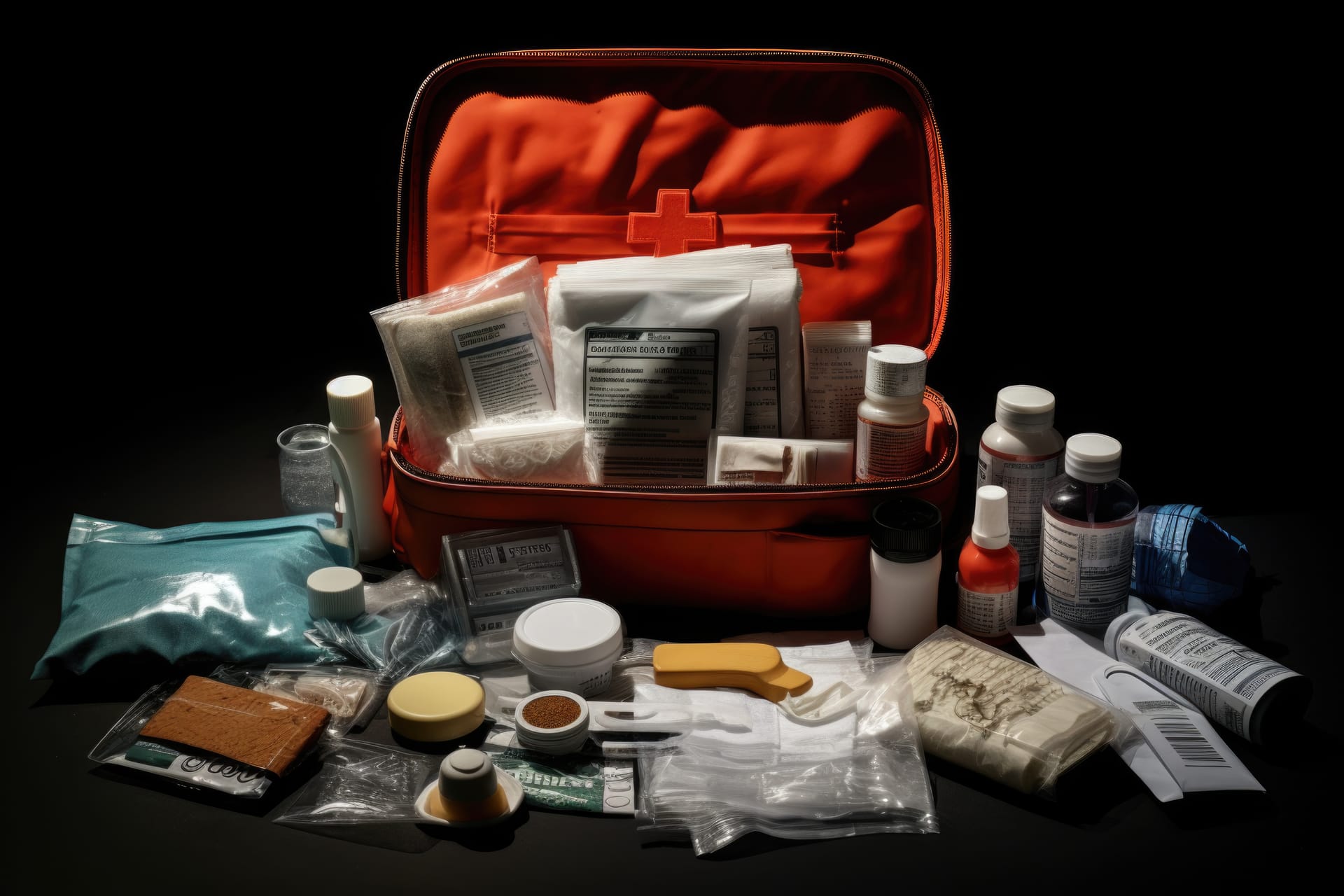
A basic first aid set belongs in every emergency kit: plasters, bandages, scissors, gloves and the personal medication that you or your housemates need. The goal is not to provide heavy care yourself, but to handle minor injuries and bridge a situation until you have professional help. We keep the medical content here at the level of what belongs in it; the deeper choices between a first aid kit and a more extensive set are in the overview about a compact first aid kit for the trail and the broader guide on medical on the move, from first aid kit to IFAK.
Important to note: a first aid set does not replace training. It helps to check now and then what you have at home and how to use it, and in emergencies to always call 112. The first aid items themselves are at the medical kits.
Warmth, light and communication
If the power goes out or you are stranded along the way, warmth, light and communication are the three things that quickly become important. A torch or headlamp with spare batteries, something to stay warm such as an emergency blanket or an extra layer of clothing, and a way to stay charged and reachable, such as a power bank, together form a practical basis. Always keep some cash and copies of important documents on hand as well, because card payments do not work without power or network.
A few practical points to note in this category: choose light you can use hands-free, such as a headlamp, so you keep both hands free. Test your power bank now and then and recharge it in time, because an empty power bank is no help. And a simple battery radio or a wind-up radio keeps you receiving information, even if the mobile network goes down. These are small, inexpensive additions that make a lot of difference in the moment itself.
The emergency kit for the car

A car emergency kit focuses on situations on the road: a breakdown, a traffic jam caused by bad weather, or being stuck in a place with no facilities. It differs from a home kit in that it has to be compact, has to cope with changing temperatures in the boot and is aimed at bridging a situation until you can move on or have help. Think of water, something to eat that copes with heat and cold, a first aid set, a torch, a safety vest and an emergency blanket.
Because a car emergency kit has its own points to consider, such as what copes with temperature swings and what is handy to have on legal grounds, we have a separate overview for it. The complete contents are covered in the overview about what belongs in a car emergency kit. Use the basis above as a starting point and tune the quantity and the extras to how and where you drive.
The 72-hour emergency kit

A 72-hour emergency kit is meant to keep you self-reliant for three days, for example during a longer power cut or when you cannot count on facilities for a while. The period of 72 hours recurs in government advice, because in a larger disruption emergency services may need time to reach everyone. For the current guidelines we point to the official information; see the sources at the bottom of this article.
A 72-hour kit is at its core the basis from this overview, but then in the quantity for three days: enough water, shelf-stable food, a first aid set, light, warmth and a way to stay reachable. How to put that together concretely and what the practical points are is covered in the overview about the 72-hour emergency kit. Keep it manageable: a kit you actually have and maintain is worth more than an extensive kit you never finish.
The emergency kit at home
At home you have more space and do not need to cram everything into a bag, but the principle stays the same: make sure you can manage for a few days without power, water or shops. A home kit leans heavily on a shelf-stable supply of water and food, lighting, warmth and a radio or other way to receive information when the network falters.
Because a home kit has its own logic, such as where you store it and how you maintain it, we have a separate overview for it. The full contents are covered in the overview about an emergency kit at home. That also covers how a home kit and a 72-hour kit complement each other, so you do not buy double.
Maintenance: keeping your kit up to date
An emergency kit is not a matter of putting it together once and forgetting it. Water, food, batteries and medication have a shelf life, and your situation changes: a move, a new family member or a different vehicle often means your kit has to grow along. It helps to choose a fixed moment each year, for example at the turn to winter, to check your kit.
A few practical points to note for maintenance:
- check the shelf life of water, food and batteries and replace what has expired
- simply eat shelf-stable supplies now and then and top them up, so nothing spoils
- check the personal medication and the first aid set for completeness
- adjust the contents if your household, your vehicle or your situation changes
By doing this once a year, your kit stays usable at the moment you really need it. A current kit that is small works better than an extensive kit that sits half-expired in a cupboard.
The RFG parts for your emergency kit
RidgeFront Gear offers parts that fit in an emergency kit and that prove their value in practice: from medical kits and first aid sets to water bottles and carriers to bring or store water. The starting point is functional and clear, so you choose based on what your kit really needs and not on what looks like a lot.
For the medical basis, look at the medical kits, for water and carriers at the water bottles and carriers, and if you want to organise your kit in a good bag at the outdoor backpacks. Use the basis and the three kit types from this overview as a frame to decide what suits your situation.
Frequently asked questions
What does the government advise in an emergency kit?
The government advises being prepared for situations where facilities temporarily fail, with among other things enough water, shelf-stable food, lighting, a radio and a first aid set as the basis. The precise and current guidelines can change; for that reason consult the official source instead of loose lists. The reference to that official information is at the bottom of this article.
What should you stock for 72 hours?
For 72 hours you keep the basis in the quantity for three days: enough drinking water per person, shelf-stable food that needs no preparation, a first aid set, light, warmth and a way to stay reachable and receive information. The concrete contents are in the overview about the 72-hour emergency kit. Tune the quantities to the size of your household.
What goes in a car emergency kit?
A car emergency kit usually contains water, shelf-stable food that copes with heat and cold, a first aid set, a torch, a safety vest and an emergency blanket, plus what is practical on the road during a breakdown or bad weather. Because the boot sees temperature swings, you watch out for items that can cope with that. The full contents are covered in the separate overview about the car emergency kit.
How much water do you need per person per day?
For drinking and basic hygiene a generous amount of water per person per day is often kept, depending on temperature, effort and circumstances. There is no single number that always holds; assume a generous margin and bear in mind that you cannot always refill. The official guidelines for emergency supplies give a concrete rule of thumb for this; see the source at the bottom.
Sources and more information
For the current and official guidelines on an emergency kit and self-reliance during emergencies we point to the information from the Dutch government via rijksoverheid.nl and the emergency kit advice from denkvooruit.nl. For the exact quantities and the most recent advice, always follow those official sources; this article is meant as a practical frame, not as a replacement for the official guidelines.
Put together your emergency kit with parts that work in practice. Start with the basis: medical and water.