A backpack can be the perfect size and fit and still carry uncomfortably, simply because it is adjusted wrong. Many people let all the weight hang on their shoulders, while your hips are meant to do the heavy work. In this article we walk step by step through how to adjust a backpack well, with the hip belt as the core.

Why adjusting makes such a difference
Your shoulders are not made to carry a lot of weight for long. Your hips are. A well adjusted backpack moves most of the weight to your hips, so your shoulders only hold the bag against your body. The difference is big: less pain, less fatigue and a more stable stride.
Always adjust with a loaded bag, because an empty backpack hangs differently from a full one. Do it calmly and adjust the straps in the right order.
Step 1: loosen everything
Start with all straps loosened, so you can build up from a neutral position. Put the backpack on and make sure it hangs comfortably on your back before you start tightening.
Step 2: the hip belt first
This is the most important step. Position the hip belt so the padded part rests on your hip bones, not on your waist or belly. Then pull the belt firmly, so the weight lands on your hips. You should feel the bag settle down onto your hips.
Step 3: the shoulder straps
Now tighten the shoulder straps until they lie neatly over your shoulders, but not so tight that they take over the weight. The straps hold the bag against your back, they do not do the heavy work. If there is space between the strap and your shoulder, the bag sits too low or the back length is wrong.
Step 4: the load lifter straps
Many backpacks have small straps at the top of the shoulder straps that run to the bag. Pull those slightly to bring the top of the bag closer to you. This prevents the backpack from pulling backwards and keeps the weight close to your body.
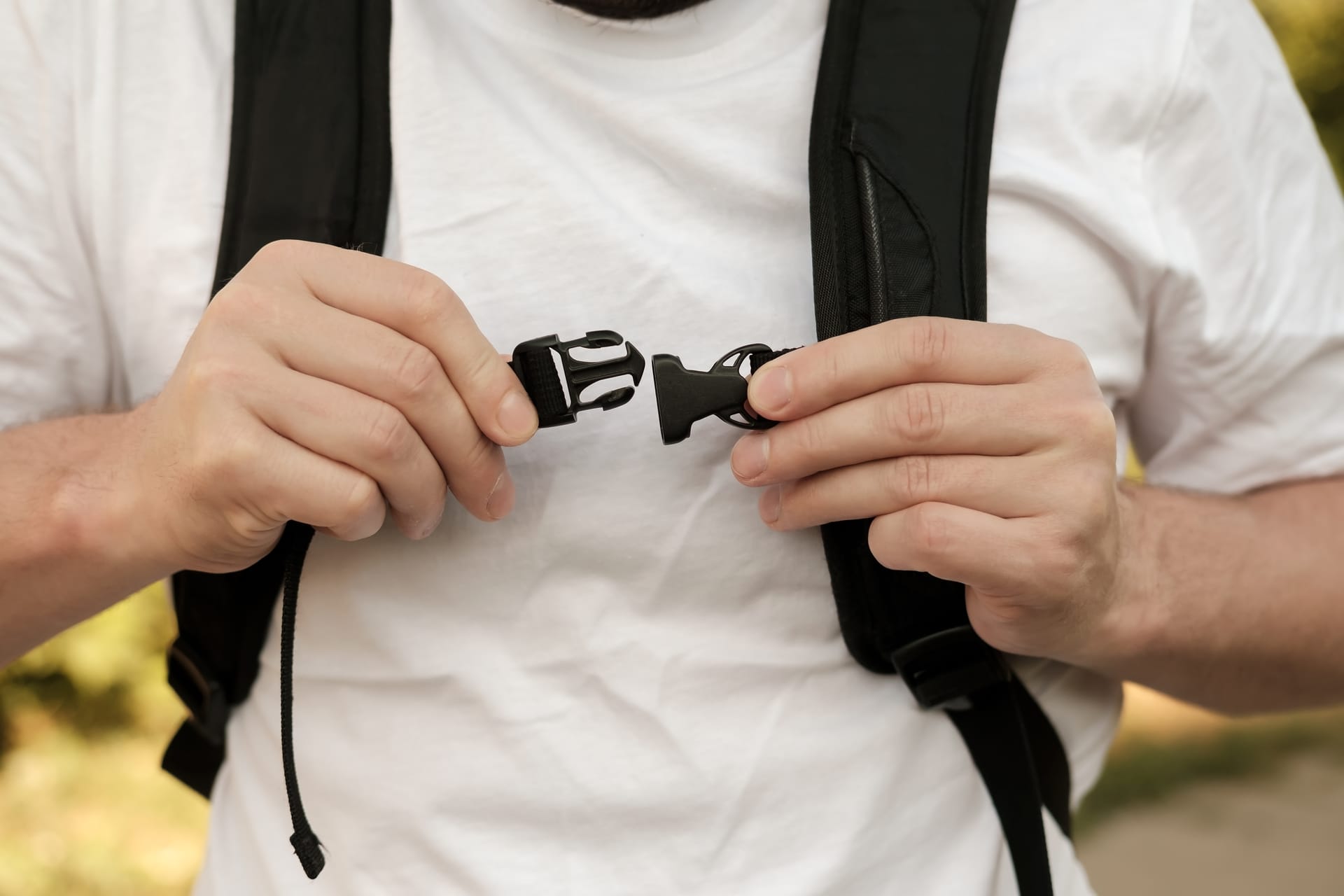
Step 5: the chest strap
Finally, close the chest strap at a height that sits comfortably, usually just below your collarbones. This strap keeps the shoulder straps in place, especially during movement. Do not pull it too tight, as that restricts your breathing.
The right back length
Some backpacks have an adjustable back length. If that is wrong, you will never get the weight properly onto your hips. If the bag does not fit your back length, adjusting only helps so much. If you doubt the size itself, read which backpack size you need.
If you want a bag that adjusts well, take a look at the outdoor backpacks.

Frequently asked questions
How do you adjust a backpack well?
Adjust in this order: loosen everything, place the hip belt on your hip bones and tighten it, then tension the shoulder straps, the load lifters and finally the chest strap. Do this with a loaded bag.
Where should the hip belt sit?
The hip belt should rest with the padded part on your hip bones, not on your waist or belly. That is where it can best carry the weight.
Should the shoulder straps be tight?
The shoulder straps should lie neatly over your shoulders, but not carry the weight. That should rest on your hips. The shoulder straps only hold the bag against your back.
Why does my back hurt from my backpack?
Often too much weight hangs on your shoulders because the hip belt is not adjusted well or the back length is wrong. Start with the hip belt and check the fit.
A good fit starts with the right backpack. See models with an adjustable carry system.