Important to read beforehand
This text is intended to be informative and educational. It is not a replacement for professional medical help and not a replacement for a certified first-aid course. In an emergency you always call 112 first. The information below is descriptive and helps you understand what gear is meant for, not how to carry out a treatment.
Anyone who is regularly active outdoors will sooner or later run into the question of what to bring in case something goes wrong. For one person that is a box of plasters, for another a more extensive set. And increasingly the term IFAK comes up with it. In this overview we calmly lay out what medical on the go actually involves, how an ordinary first-aid kit and an IFAK relate to each other, where you carry your set and how you keep it in order.
We keep it descriptive and without jargon. The goal is that you understand what the different sets are meant for and which approach suits how and where you head out. For the actual actions, the rule is: a set only helps in combination with knowledge, and you get that knowledge from training, not from a blog.
What "medical on the go" actually means
Medical on the go is a collective name for everything you have with you to deal with injury or discomfort at a moment when professional help is not immediately on the scene. That ranges from a blister plaster on a day walk to a set meant to help bridge serious blood loss until help arrives.
The core of the idea is preparation without excess. You do not have to carry an ambulance in your backpack, but it helps if you have thought soberly about what is realistic for your situation. Someone who walks short loops in the park has a different consideration than someone who walks a remote route alone or works with tools that can cause cuts. Two things mainly determine that consideration: how big the chance of injury is in what you do, and how long it would take for professional help to arrive. The further from civilisation and the longer that bridging time, the more a more extensive set makes sense.
It helps not to see medical on the go as a product, but as a combination of three things: the items you have with you, the place where you carry them so you find them quickly, and the knowledge to use them. A set without knowledge is limited, and knowledge without a set is too. In this overview all three come up, with the emphasis on the choice that suits your use.
Two terms keep recurring: the ordinary first-aid kit and the IFAK. They are often used interchangeably, while they each have their own purpose. Understanding the difference helps you make a choice that suits your use, instead of bringing as much as possible just to be safe. In the following chapters we put the two side by side, look at what is usually in an IFAK, where you best carry your set and how you keep it in order.
First-aid kit, IFAK or both?

The short version: it is not an either-or choice. A first-aid kit and an IFAK cover different kinds of situations and complement each other. Below you can read what each is meant for.
The ordinary first-aid set: for grazes, blisters and plaster work
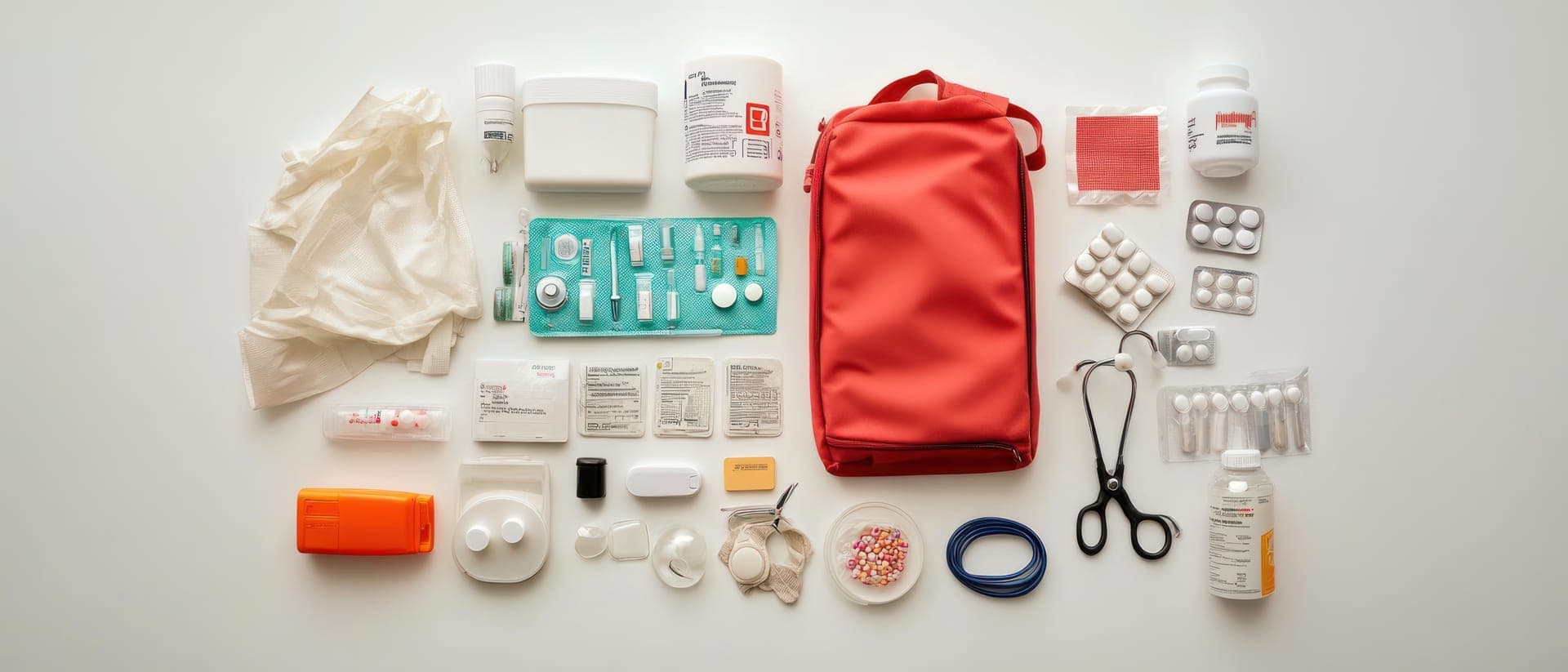
An ordinary first-aid set is aimed at the everyday discomforts you run into during a trip. Think of a graze, a blister, a splinter, a small cut or a headache. The contents usually consist of plasters, blister plasters, antiseptic wipes, tweezers, some gauze and simple basics.
This is the set that, for many people, goes along on almost every walk or day trip. It is compact, broadly usable and aimed at comfort and small problems. The chance that you use it is relatively high, because small discomforts are simply part of being outdoors: a blister on a long day, a graze after a slip or a splinter after clearing some wood. Precisely because you use it often, it pays to keep it replenished and in order.
If you want to know what exactly belongs in such a set, you will find that in the overview about what belongs in a compact first-aid kit. There you can read per item what it does and why it belongs in a basic set.
The IFAK: aimed at serious blood loss
IFAK stands for Individual First Aid Kit. Loosely translated it is a personal emergency kit aimed at serious injury rather than at small discomforts. Where an ordinary first-aid set targets grazes and blisters, in an IFAK the emphasis is on dealing with serious blood loss and bridging the first minutes until professional help arrives.
An IFAK is therefore usually compact, clearly organised and meant to be quickly at hand. The thinking behind it is that with serious injury, time plays a role, and that you then do not want to be searching. The layout is often set up so that you quickly find the right thing per category, even under stress and even if someone else has to open the set for you.
Important to point out: an IFAK is meant as an aid and does not replace professional help or training. The set only works in combination with knowledge about its use. Anyone who seriously wants to head out with an IFAK would do well to take a certified first-aid course. The difference between a set that stays in a bag and a set that can really mean something lies largely in that knowledge. That is why the order matters: first learn, then equip, not the other way around.
When you bring which one
For most day trips close to home, a good first-aid kit is enough. The chance of serious injury is small and help is usually quickly on the scene. If you go further into nature, walk longer or remote routes, are often out alone or work with material where serious cuts can occur, people more often choose to add an IFAK.
In practice it often comes down to a combination: a first-aid kit for the daily things and an IFAK for the heavy scenario you would rather not think about, but want to be prepared for. The two do not conflict; they cover different parts of what can go wrong. A handy way to look at it: you will probably use the first-aid kit regularly for small things, while the IFAK you hope never to need but carry just in case.
If you want to see this difference explored further, with a concrete comparison of when which set makes sense, the overview about an IFAK or an ordinary first-aid kit and what you really need will help you further.
What belongs in an IFAK?

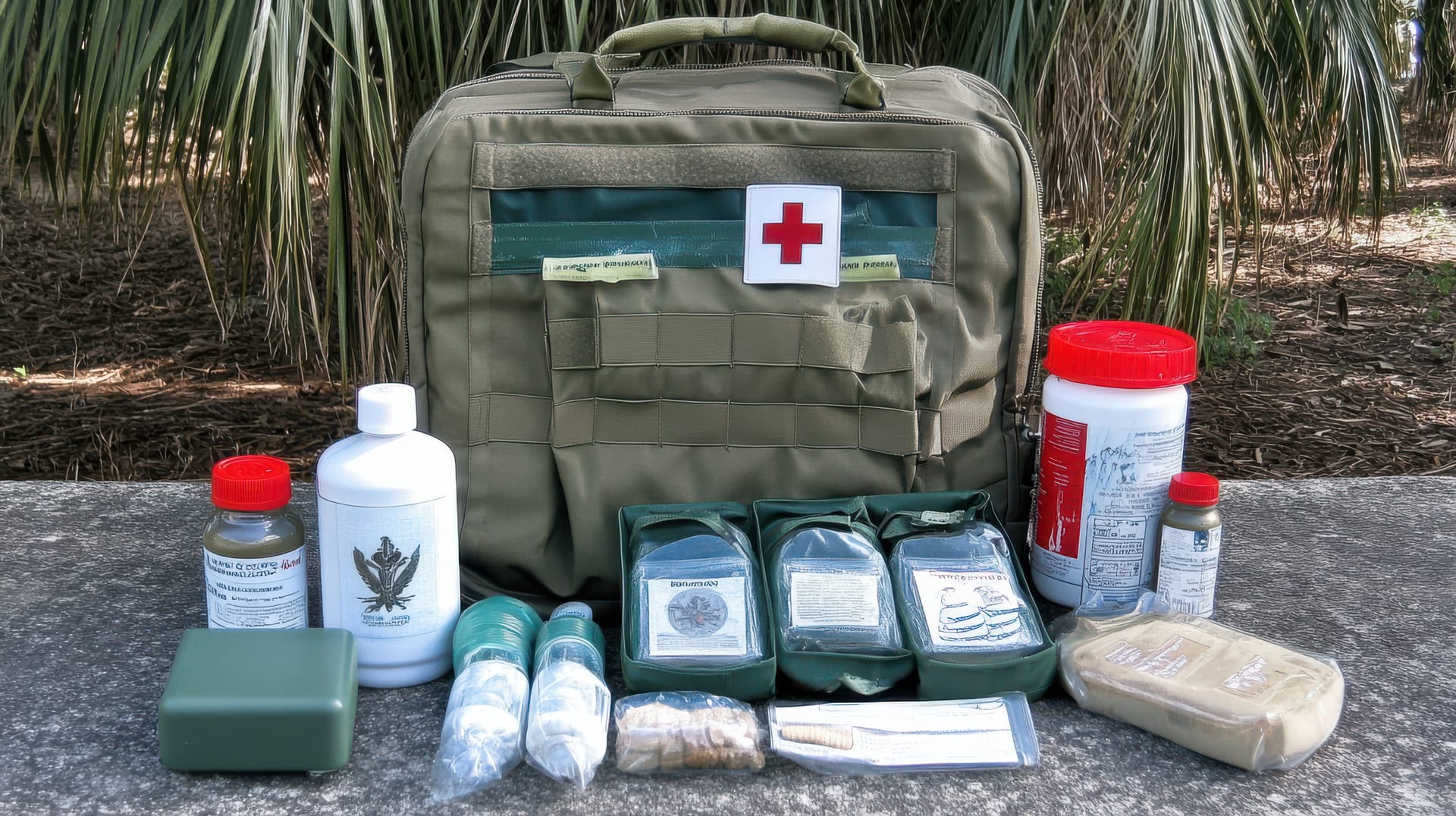
The contents of an IFAK revolve around a few core categories. The starting point is not bringing as much as possible, but the right things kept clearly together. Below is a descriptive overview of what you usually come across; for the complete contents list there is a separate, deeper explanation.
- means to deal with serious blood loss, such as a pressure bandage or a tourniquet
- sterile gauze and material to cover a wound with
- tape to keep a bandage in place
- scissors to cut clothing or bandage loose
- gloves to be able to work hygienically
- an emergency blanket against cooling down
This is not a fixed shopping list, but a framework. What a set contains exactly depends on where you are, how long you are out and how far help is. If you want to see the complete contents per item, read the overview about what an IFAK is and what belongs in it. There you find the extensive contents list.
Again the framework: the presence of an item does not mean you can simply use it. The contents are meant in combination with knowledge. A set is an aid, not an instruction, and in an emergency the rule is always that you call 112 first.
Where do you carry your medical set: backpack, car or EDC

A medical set only helps if you have it with you at the moment it counts. The finest set in a cupboard at home does nothing on the go. Where you carry your set is therefore just as important as what is in it. The starting point is accessibility: a fixed, known place where you find it without thinking.
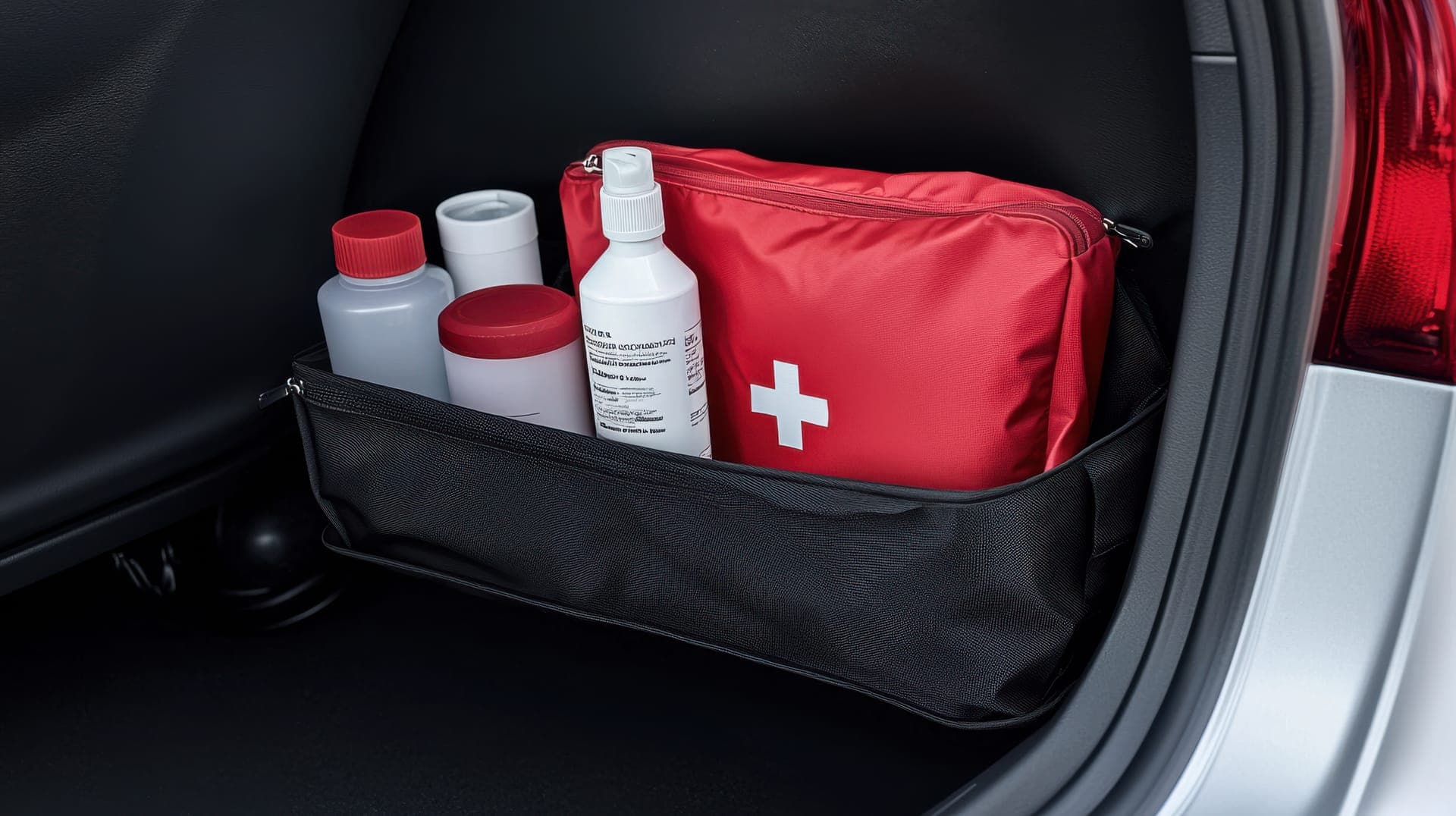
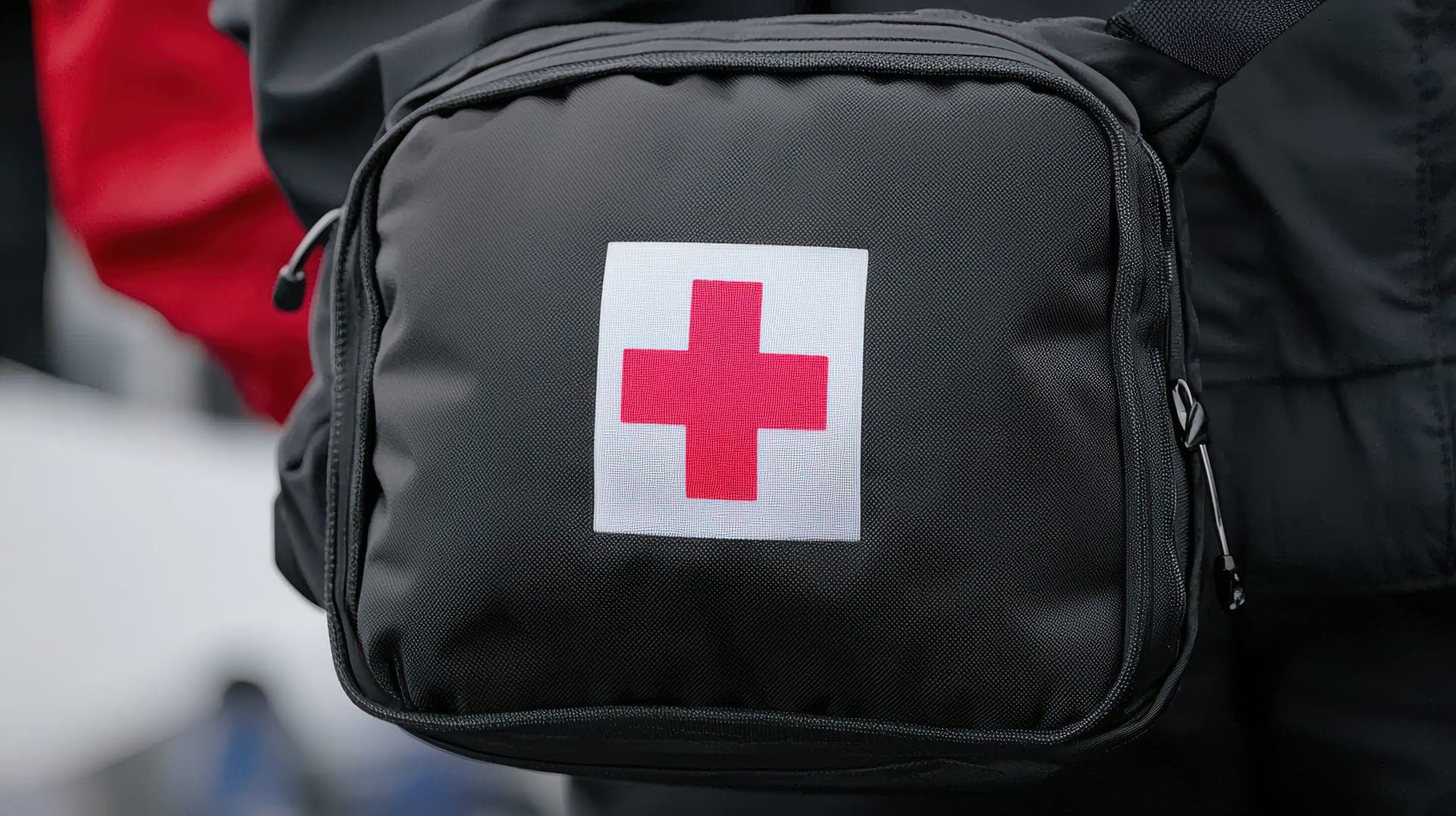
In the backpack you usually opt for a top pocket or outer pocket rather than at the bottom under your lunch and spare clothing. A recognisable, separate pouch helps, also so someone else can find the set if you are the one who needs help. In the car, people often choose a place that is reachable from the seat rather than deep in the boot, because injury on the go occurs precisely there and you then do not want to get out to grab something. And for daily use there is a more compact variant that people often call EDC, that is, things you carry with you every day; with that it is about the trade-off between size and contents, because a set you take every day must be small enough to actually go along.
The recurring principle at all these places is accessibility over completeness. An extensive set that you cannot find quickly under pressure is in practice worth less than a simpler set in a fixed, known place. So keep your medical set separate from your ordinary items and always give it the same place, so that in a hectic situation you do not have to think about it.
Which place works for you depends on how you are out. If you want to go into this more deeply, the overview about an IFAK for on the go in your car, backpack or daily with you describes the considerations per situation. A suitable place often starts with a backpack with a logical layout; you find the options at the outdoor backpacks.
Maintenance and shelf life of your medical set

A medical set is not a one-off purchase that you forget. Bandage material can get dirty or damp, tape can dry out and some parts have an expiry date. A set you never check can let you down at the wrong moment.
It helps to make a habit of opening, checking and replenishing the set a few times a year, replacing what you have used or what is out of date. A fixed moment, for example at the change of seasons, makes sure you do not forget it. While doing so, go through the contents for dirt, damage and shelf life, and replenish what is missing so the set stays complete.
Also keep in mind that heat in summer and cold in winter can affect the contents, especially with a set you permanently keep in the car. Material that is exposed to large temperature differences for a long time deteriorates faster. A set you check and keep current is exactly what it is all about: being prepared means not only having something with you, but also that it is usable at the moment it counts. If you want to replenish parts, you find separate items and complete sets at the medical kits.
The RFG medical kits in brief
RidgeFront Gear offers medical gear that suits use on the go: from separate parts to replenish an existing set with to a focused trauma set. The starting point is functional and clear, so you find what suits how and where you head out.
If you want a focused starting point, the IFAK trauma kit is a sensible place to begin. For the broader range, including first-aid parts and additions, look at the medical kits. Which set suits you depends on your use; use this overview as a framework to make that consideration.
Frequently asked questions
What does the abbreviation IFAK stand for?
IFAK stands for Individual First Aid Kit, that is, a personal emergency kit aimed at serious injury such as serious blood loss, rather than at small discomforts.
What is the difference between an IFAK and an ordinary first-aid kit?
An ordinary first-aid kit is aimed at small discomforts such as grazes and blisters. An IFAK is aimed at serious injury and dealing with serious blood loss. They complement each other; many people carry both.
What is the difference between MFAK and IFAK?
An IFAK is an individual set for personal use. MFAK is used for a somewhat larger set, usually meant to be able to deal with more injuries or several people. The basic idea behind both is the same: bridging serious injury until help arrives.
How do I choose a medical set for on the go?
Start from your use: how long are you out, how far are you from help and how big is the chance of serious injury. The more remote and the longer, the more an IFAK alongside a first-aid kit makes sense. Important is that you know how to use the contents; a certified first-aid course is more valuable in that than extra parts.
Do you want to get your medical gear in order? Browse the selection and choose what suits your use on the go.