An emergency kit at home is there for the moments when the usual services briefly fail: a longer power outage, a fault in the water mains or weather that keeps you indoors for a few days. The idea is simple: make sure that at home you can get by for a few days without power, tap water or a quick trip to the shop. This overview lists the basics that make sense specifically for at home.
We keep it level-headed and practical. At home you have more room than in a bag or a car, so this is less about packing compactly and more about a sensible stock and a fixed place where everything is kept. For a car emergency kit or a kit that you take with you, different considerations apply; we deliberately leave those aside here and link to them at the bottom.
Good to know
This article is intended to be informative and educational. The medical parts do not replace professional help or a first-aid course. In a real emergency, always call 112. The preparations mentioned are general guidelines; tailor them to your own household.
What belongs in an emergency kit at home

The contents of a home kit revolve around self-reliance for a few days. The emphasis is on a long-life stock of water and food, because those are the first things you miss if the mains or the shop falls away. In addition you want light, warmth, a way to receive information and a basic first-aid kit.
The basics for an emergency kit at home look like this:
- enough drinking water per person, plus some extra for cooking and hygiene
- long-life food that needs no refrigeration or preparation and that your household actually likes
- lighting: a flashlight or headlamp with spare batteries, and possibly candles with matches
- warmth: extra blankets or a warm layer of clothing for when the heating fails
- a battery-powered radio or a wind-up radio to keep receiving information
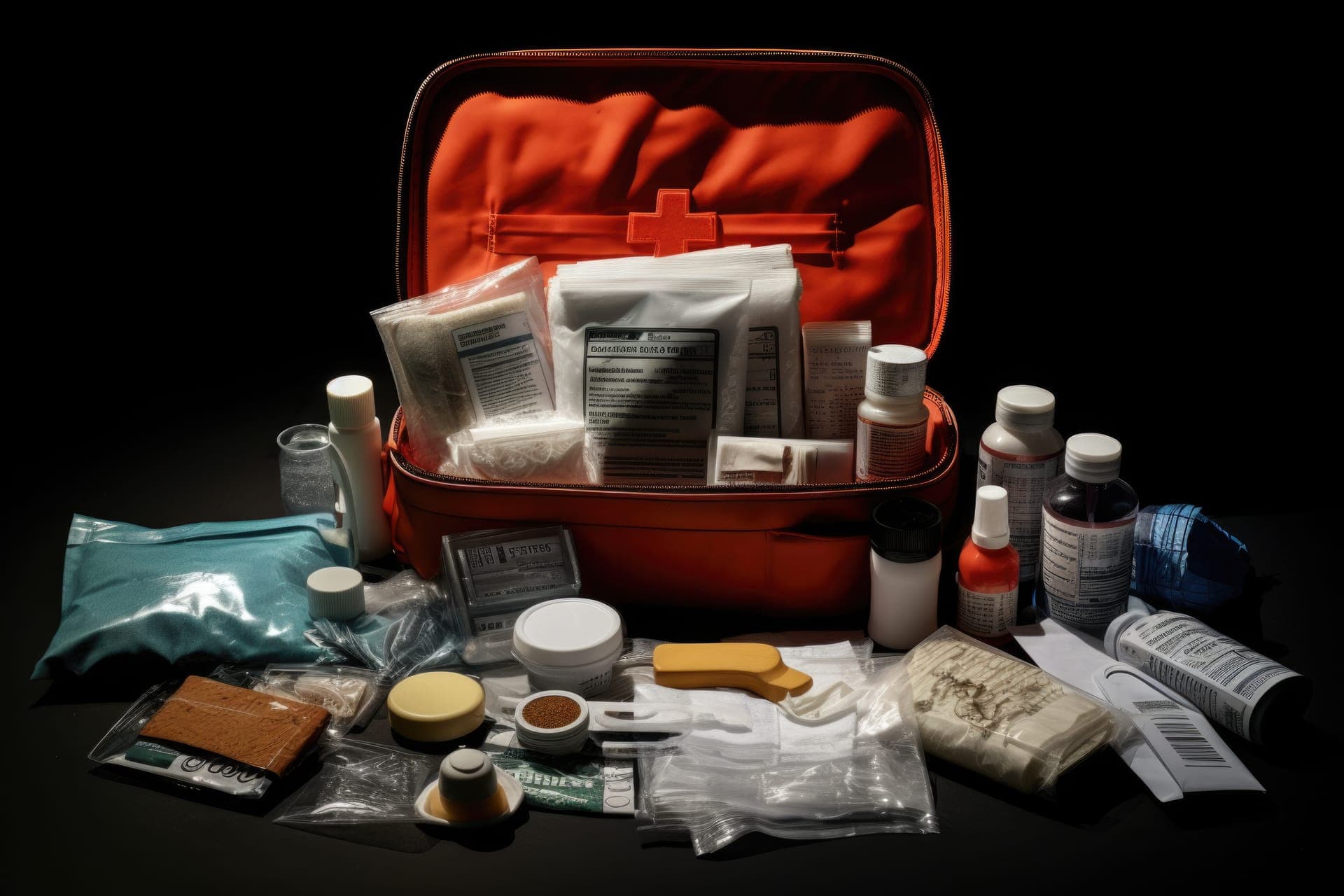
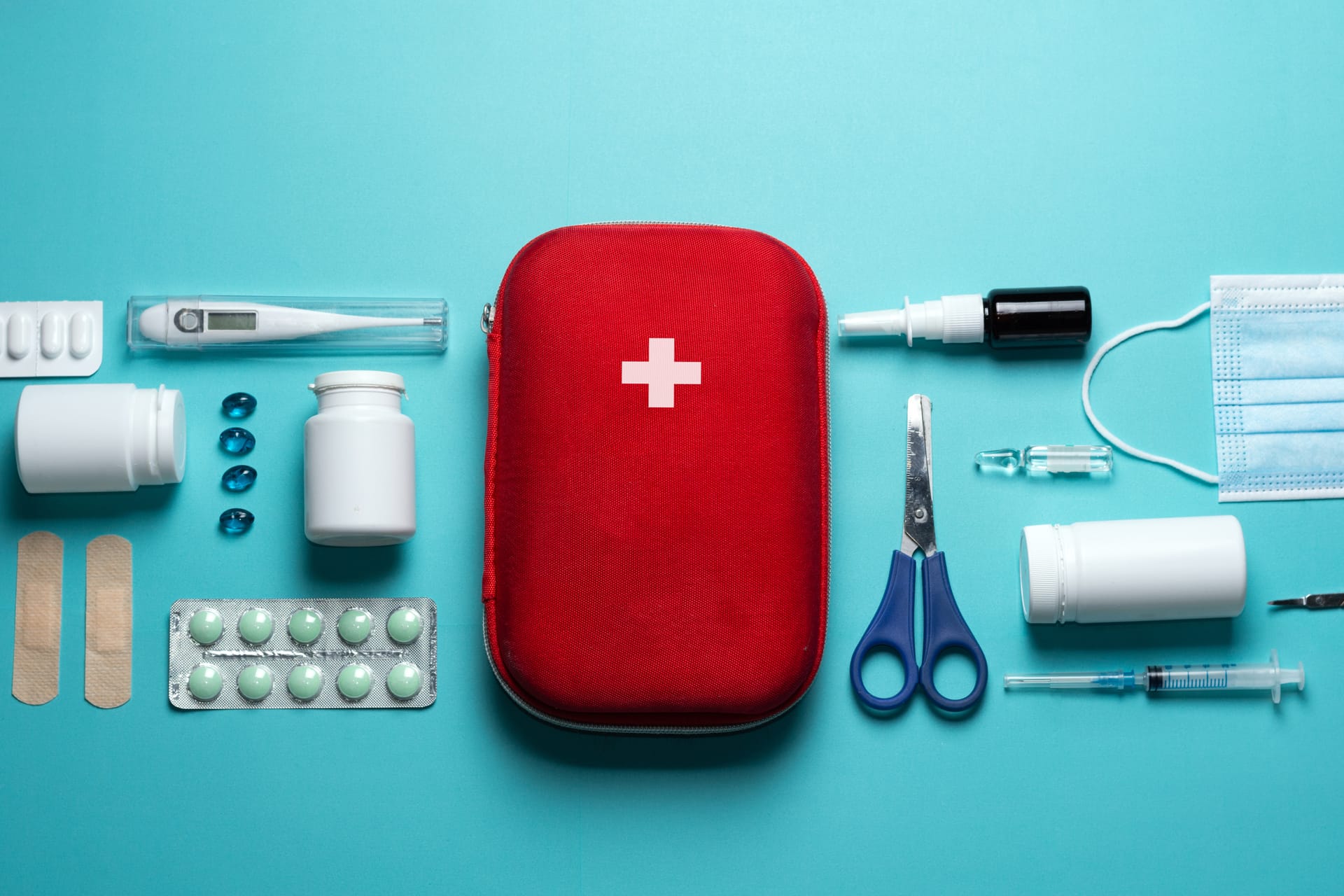
- a basic first-aid kit and the personal medication of your housemates
- cash and copies of important documents, because card payments do not work without power or network
For the water side it is handy, besides bottles, to also have something to store or carry water in; you can find those at the water bottles and water carriers. You can browse the first-aid basics at the medical kits. Keep it manageable: a complete kit that you actually have is worth more than an extensive list that stays half finished.
Water and food: your stock at home

Water is the most important item. Count on a generous amount per person per day for drinking and basic hygiene, and keep in mind that you have to be able to get by for a few days. Store the water in a cool, dark place and replace it in time. For the current guideline on amount we refer to the official source at the bottom of this article.
For food, a stock of long-life products that need no refrigeration or preparation works best. The practical trick is to stock the ordinary long-life groceries you use anyway a bit more generously and to eat and replenish them now and then. That way your stock stays fresh, you do not have to throw anything away and there is no separate box sitting in the cupboard going out of date.
Where you store it and how you keep it current
A home kit only works if you know where it is and if the contents are right at the moment you need it. Choose a fixed, easily accessible place that everyone in the house knows about, for example a cupboard by the front door or in the storage room. Keep the items you want to keep together in one or two boxes or bags, so you can find them quickly in the dark.
To keep it current it helps to choose a fixed moment per year to go through the kit:
- check the shelf life of water, food and batteries and replace what has expired
- eat the long-life stock now and then and replenish it, so nothing spoils
- check the first-aid kit and the personal medication for completeness
- adjust the contents if your household changes, for example with a new family member
By doing this once a year, for example at the transition to winter, your kit stays usable. A small but current kit works better than a large kit that sits half-expired at the back of a cupboard.
The difference with the car and 72-hour kit
An emergency kit at home, a car emergency kit and a 72-hour kit are alike, but each has its own logic. The home kit leans on a more generous stock and a fixed storage place; the car kit has to be compact and able to handle temperature swings in the boot; the 72-hour kit is aimed at exactly three days of self-reliance and overlaps strongly with your home stock.
It helps to tune those three to each other so you do not buy double. What belongs in your car, you can read in the overview about what belongs in an emergency kit for the car. How to put together a kit for exactly three days is in the overview about the 72-hour emergency kit. Your home stock often forms the core that those other two build on.
Frequently asked questions
What is in an emergency kit at home?
An emergency kit at home contains, at its basics, enough drinking water, long-life food that needs no preparation, lighting with spare batteries, something to stay warm, a battery-powered radio, a first-aid kit with personal medication, and cash plus copies of important documents. Tailor the amounts to the size of your household and the number of days you want to be able to get by.
How much water should you keep in stock at home?
For at home, a generous amount of water per person per day is often kept for drinking and hygiene, for several days. A fixed number that always holds does not exist; assume a generous margin and store the water cool and dark. The official guidelines for emergency stock give a concrete rule of thumb for this; see the source at the bottom.
Where is it best to store an emergency kit at home?
Store your home kit in a fixed, easily accessible place that everyone in the house knows about, for example a cupboard by the front door or in the storage room. Keep the items together in one or two boxes or bags, so you can also find them quickly in the dark, and check the contents once a year for shelf life and completeness.
Sources and further information
For the current and official guidelines on an emergency kit and self-reliance at home we refer to the information from the Dutch government via rijksoverheid.nl and the emergency kit advice from denkvooruit.nl. For the exact amounts and the most recent advice, always rely on those official sources; this article is intended as a practical framework, not as a replacement for the official guidelines.
Put together your emergency kit at home with parts that work in practice. Start with water and the first-aid basics.