A bushcraft backpack is the thing you carry for hours and that keeps all your gear together, so it is worth choosing well. Bushcraft asks for different qualities than an ordinary day trip: you take bulky gear more often, you attach items to the outside and your backpack takes more of a beating in rough terrain. In this overview we go through the points you look at, without having to buy the most expensive pack to do so.
We keep it functional. It is about what a backpack for bushcraft really needs to do: offer enough room, carry things securely and take a knock. We deliberately leave the broader choice of size and fit aside here, because that belongs to the general backpack guide we point to at the bottom.
Why a bushcraft backpack has different requirements
On an ordinary day trip you often carry a compact, light backpack with your food, water and a layer of clothing. For bushcraft it is different: you take more and bulkier gear, you want to be able to attach items to the outside and your backpack brushes past branches, bushes and the ground. That calls for more volume, sturdier attachment and more durable material.
It comes down to a bushcraft backpack being more of a workhorse than a lightweight day bag. You choose it based on what it has to carry and what it has to withstand, not on the lowest weight. Below we go through the three most important points.
Volume: how much room do you need

The volume determines how much you can fit in. For bushcraft you often pack more than for an ordinary walk: a shelter or tarp, extra clothing, cooking kit, water and tools. Too small and you cannot take it all; too large and you carry needlessly much and get the urge to fill it up.
The right size depends on how long you are out and what you take with you. For a day of practice you need less than for a night outside. How you match the volume to your use and body height belongs to the general size choice; we leave that aside here and point you onward. In any case, choose a size in which your basics fit comfortably without having to fill it to the brim.
Attachment: what hangs on the outside

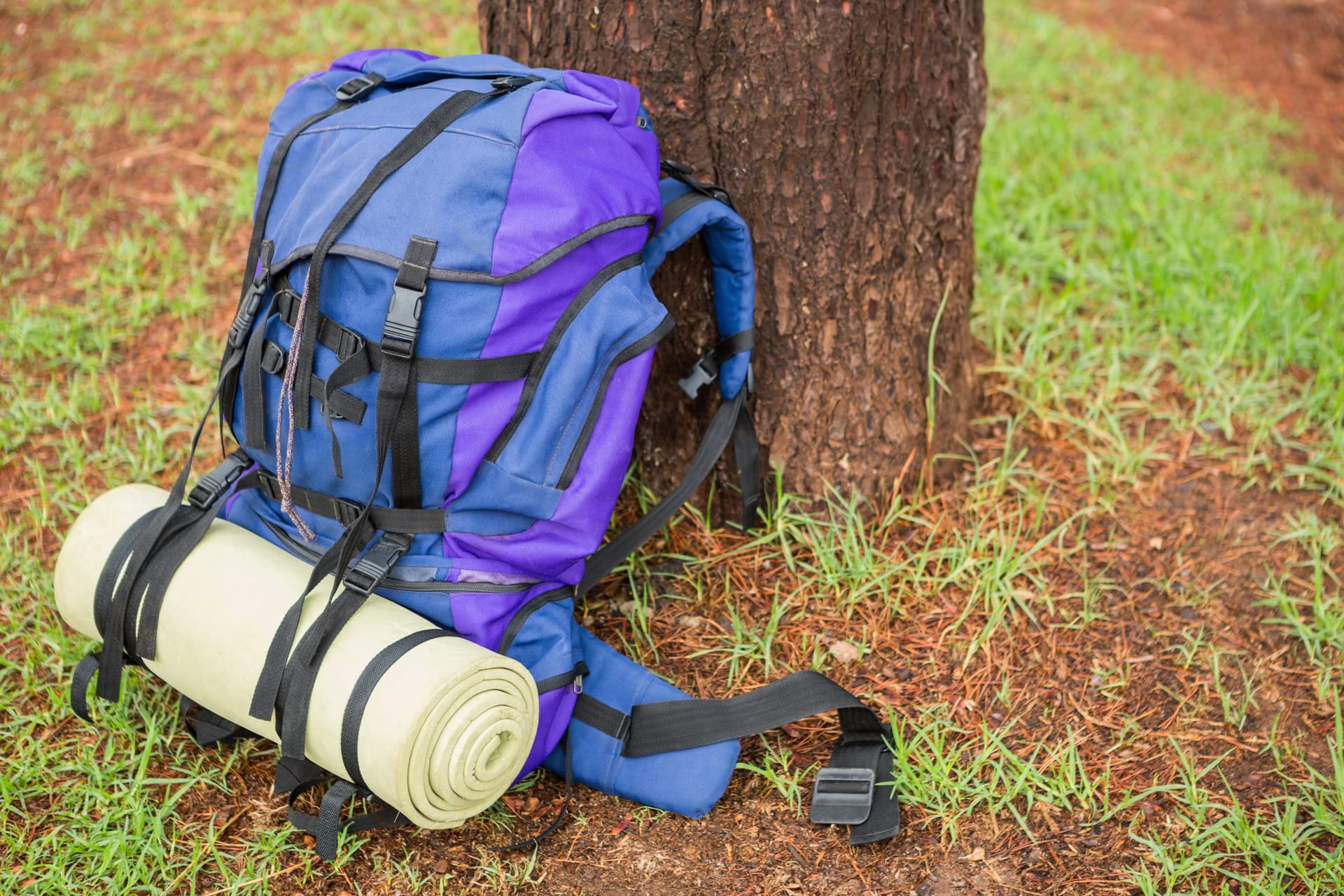
With bushcraft you want to be able to carry part of your gear on the outside, because it is bulky or because you want it close to hand. Think of a sleeping mat, a tarp or a water carrier. For that, sturdy attachment points matter: loops, compression straps and a solid lid or outer pocket you can fasten something to.
Make sure the attachment is secure and that your gear does not dangle or swing as you walk. A well-attached load sits close against your back and stays stable, even on uneven terrain. Describe for yourself what you want to carry on the outside and check whether the backpack has the points for it.
Durability: handling rough terrain
A bushcraft backpack takes more of a beating than a bag you only use on paved paths. It scrapes past branches, stands on the ground and regularly carries a heavier or angular load. Sturdy material, good seams and strong zips or buckles then make the difference between a bag that lasts for years and one that wears out quickly.
For durability, look at the fabric, the finish of the seams and the quality of the closures, because those are the places that give way first. A backpack built a touch sturdier pays off in reliability the moment you need it. Function comes before weight here.
The general backpack choice: size and fit
The points above are specific to bushcraft. The broader choice, such as which size suits your body height and how to adjust a backpack properly, applies to every backpack and we do not cover it twice. That is in the guide on which backpack suits your use. Read it alongside this one if you are in doubt about size or fit; this overview adds the bushcraft-specific requirements to it.
You can browse the backpacks themselves in the outdoor backpacks. Choose based on what you actually take and what the backpack has to withstand, rather than on what looks like a lot.
Frequently asked questions
What size backpack do you need for bushcraft?
That depends on how long you are out and what you take with you. For a day of practice you need less volume than for a night outside with a shelter and cooking kit. Choose a size in which your basics fit comfortably without having to fill it to the brim, and match the exact size to your use and body height as described in the general backpack guide.
How does a bushcraft backpack differ from an ordinary backpack?
A bushcraft backpack usually offers more volume, more attachment points on the outside and more durable material than an ordinary daypack. That is because you take bulkier gear, carry part of it on the outside and the backpack takes more of a beating in rough terrain. The emphasis is on function and sturdiness, not on the lowest weight.
How important is durable material for a bushcraft backpack?
Important, because the backpack scrapes past branches, stands on the ground and carries a heavier load. Sturdy fabric, good seams and strong closures determine whether a backpack lasts for years. A backpack built a touch sturdier pays off in reliability the moment you need it.
Choose a backpack on volume, attachment and durability, matched to what you actually take.