Start with the situation in which you use the kit
Not every first aid kit needs to contain the same things. A kit for the car differs from a small set for hiking or a compact emergency set for everyday use. Still, there are a few basic items that make sense in many situations.
Always think in terms of:
- the duration of your trip
- the distance to help or facilities
- the number of people
- the type of activity
- how much space you have
This belongs in a compact basic first aid kit
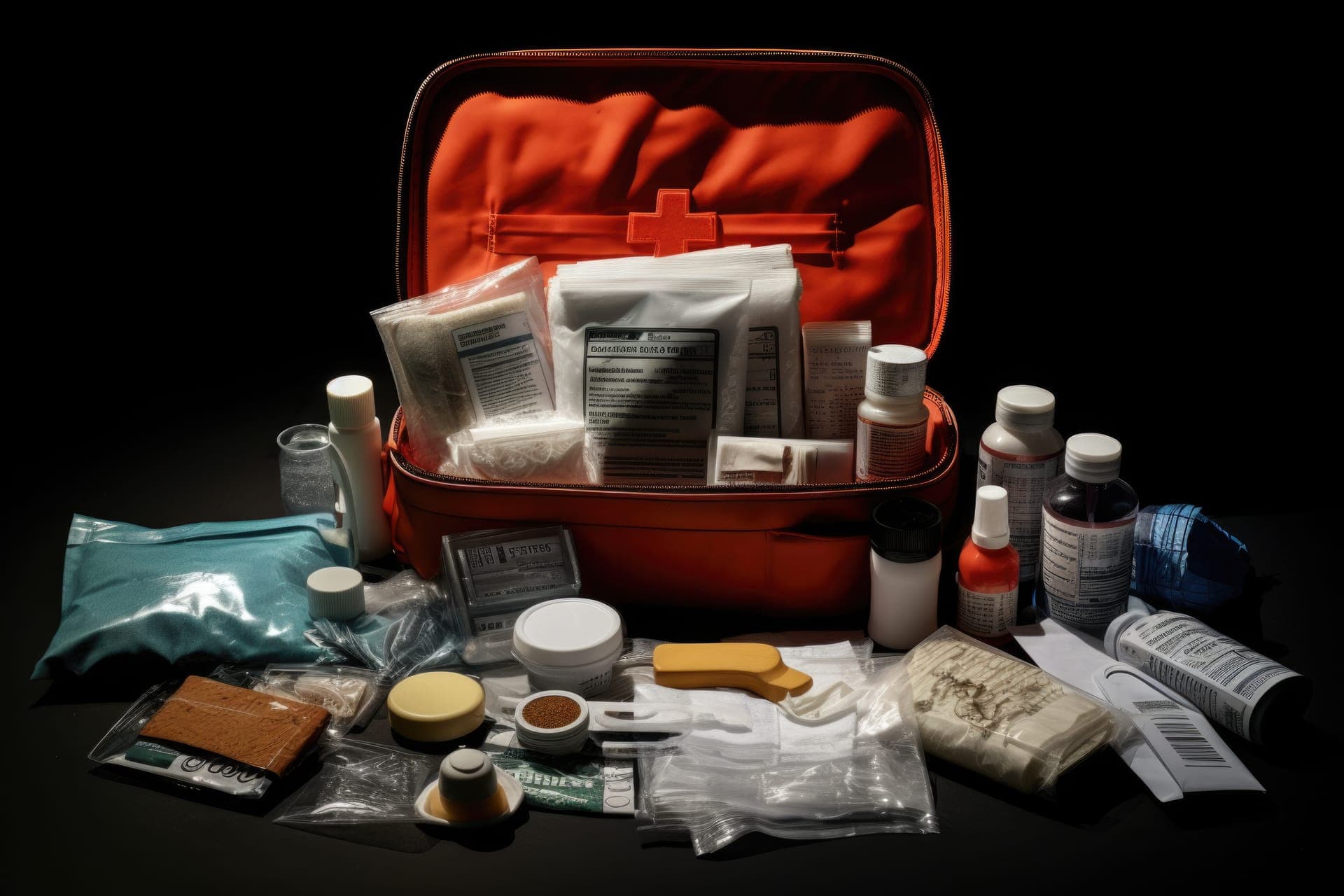
A compact kit is all about clarity and usability. The basics usually consist of items for minor injuries, quick care and first actions.
Practical basic items
- plasters in various sizes
- sterile gauze pads
- bandage or fixation material
- disinfecting wipes
- tape
- small scissors
- tweezers
- gloves
- blister care
- basic instructions or checklist
With these items you can already handle many common minor situations well.
What is extra handy on the go?
Depending on use, it can be smart to expand your kit a little.
Consider:
- extra blister plasters for hiking
- a compact emergency blanket
- extra gauze and pressure bandage
- labelling or layout per compartment
- personal items relevant to your situation
Not everything needs to come along as standard. What matters more is that your kit is logically organised and that you quickly find what you need.
First aid kit or IFAK: what is the difference?
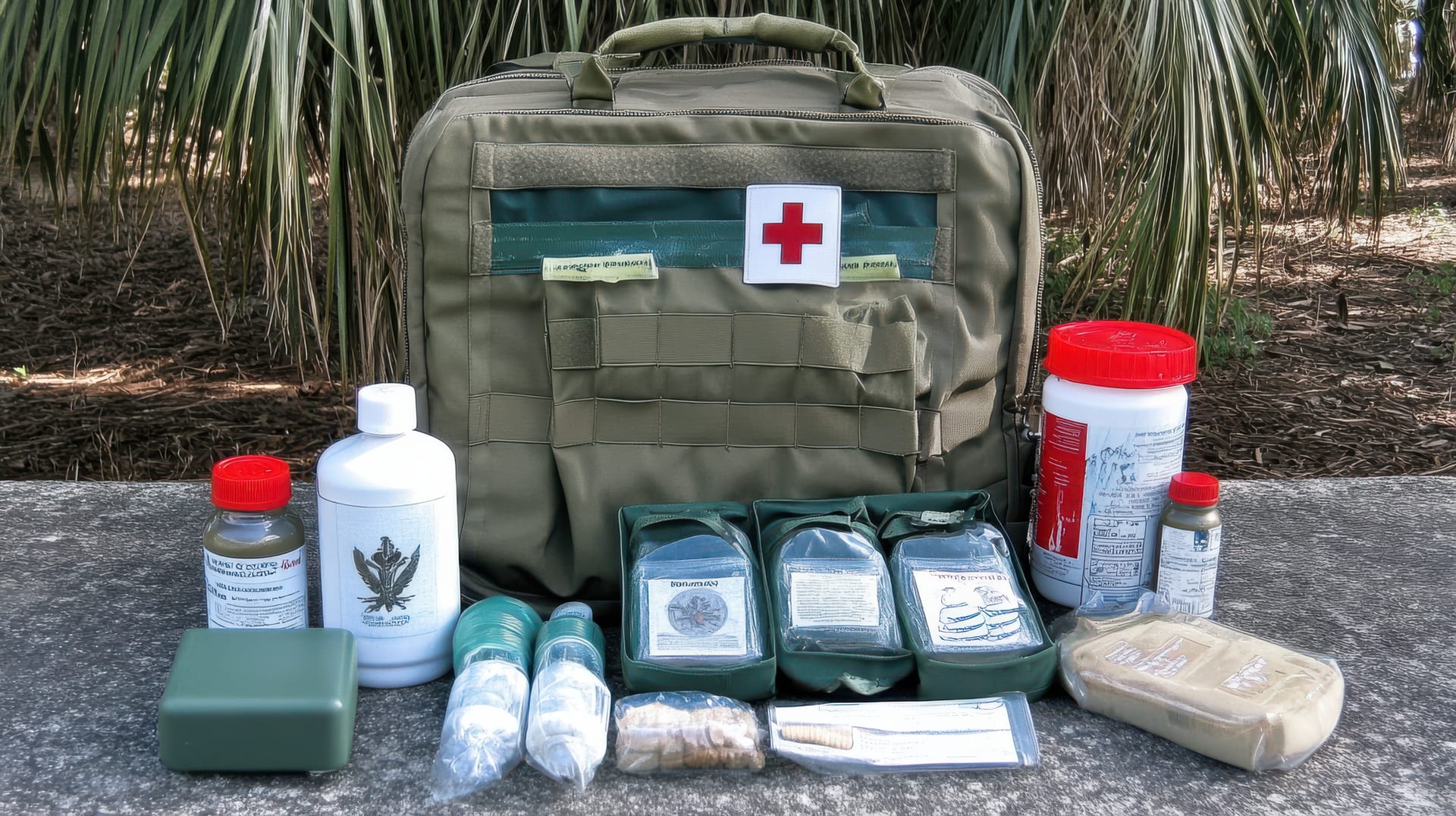
A regular first aid kit covers minor injuries: grazes, blisters, a cut. An IFAK (Individual First Aid Kit) goes a step further. It is built for serious situations where minutes count: uncontrolled bleeding, a chest wound or a blocked airway.
The difference is in the contents. Alongside the basics, an IFAK holds a tourniquet, chest seals and an emergency (trauma) bandage - the supplies you need for heavy bleeding or trauma, which a standard plaster set lacks.
When do you choose an IFAK?
- you are further from immediate help (remote trails, long road trips)
- you want to be prepared for more serious injury, not just minor accidents
- you drive a lot or work in places where accidents can happen
An IFAK is not a substitute for medical training. Where possible, take a first-aid or trauma course so you can actually use the contents. Want to know exactly what belongs in such a set? See our IFAK trauma kit with a full contents list.
Why compact often works better than large
A kit that is too large sounds complete, but is often less practical on the go. Many people prefer to carry something that:
- stays compact
- is clearly organised
- is quickly accessible
- actually comes along as standard
A smaller kit that you actually take with you is more useful in practice than an extensive set that stays at home.
What do you look for in a good medical kit?
You recognise a good medical kit not only by its contents, but also by the way those contents are organised.
Watch for these points
- a clear layout
- a sturdy pouch or case
- quick accessibility
- a logical size for a backpack, car or gear
- contents that match your use
For many users it is precisely that clarity that makes the difference between taking something along or leaving it behind.
For which situations is a compact first aid kit handy?
A compact kit is suitable for, among other things:
- hiking and day trips
- travel
- in the car
- everyday carry in a backpack
- being prepared on the go
The more mobile you are, the more important a compact and clearly organised set becomes.
Conclusion
A compact first aid kit does not have to be extensive to be valuable. If the basics are right, the layout is logical and the contents match your use, you quickly have a far more usable set on the go than with a large, cluttered collection of items. So do not aim for as much as possible, but for what you really need and can find quickly.
Frequently asked questions
What should a compact first aid kit contain at a minimum?
Think of plasters, gauze pads, bandage, disinfectant, tape, scissors, tweezers, gloves and blister care.
Is a compact first aid kit enough on the go?
For many everyday situations it is, certainly if it is logically put together and matches your use.
Is a medical kit handy for the car?
Yes. A compact and clearly organised medical kit is exactly what is very practical for the car and on the go.
Why is clarity important in a first aid kit?
Because in an unexpected situation you want to quickly find what you need, without searching unnecessarily.
Browse our selection of medical kits for compact and clearly organised first aid solutions that work practically on the go.