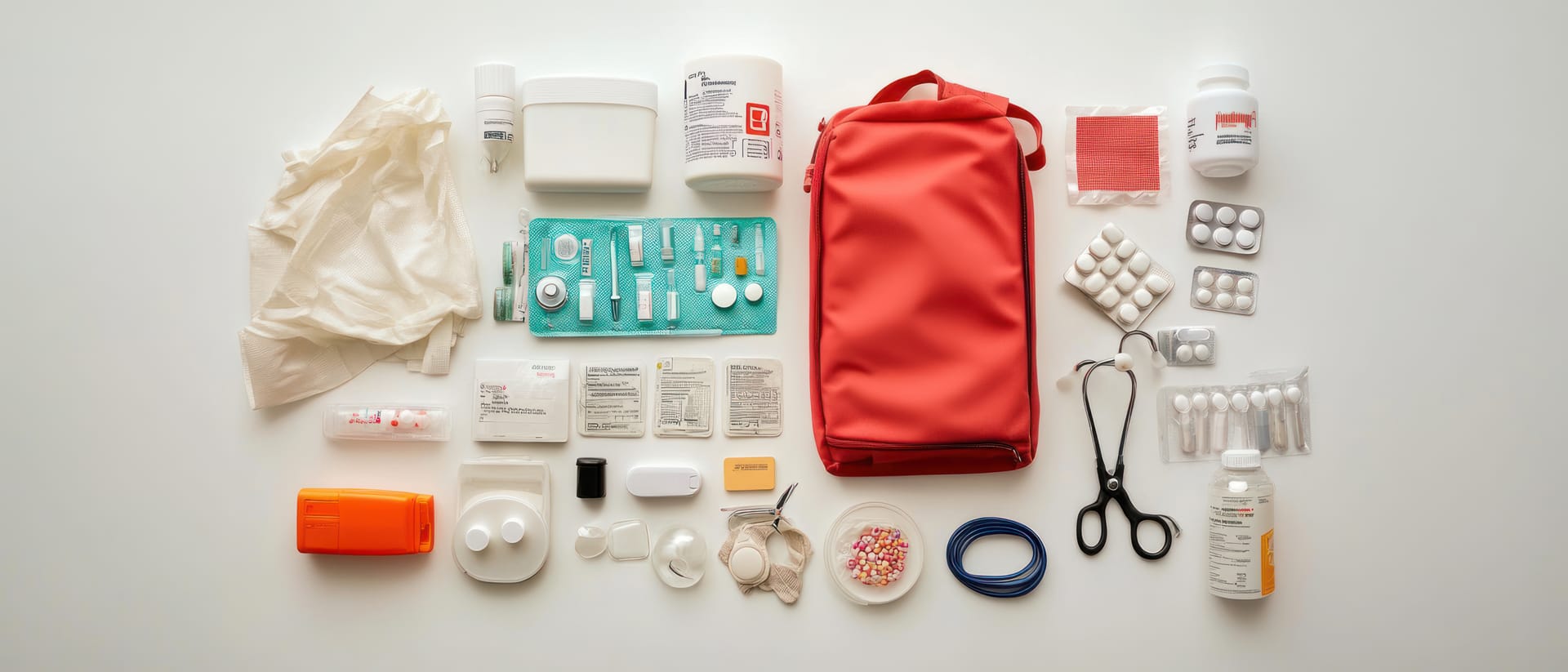
More and more people who are active outdoors come across the term IFAK, but what an IFAK actually is and how it differs from a regular first aid kit often stays unclear. In this article we calmly explain what an IFAK is, what the abbreviation stands for and which parts really belong in one for outdoor use and travel.

We keep it practical and free of jargon. The goal is that after reading you know what an IFAK is good for and whether it fits the way you use your gear.
What does IFAK actually mean?
IFAK stands for Individual First Aid Kit. In plain terms it is a personal emergency kit aimed at dealing with injuries, not minor ailments. Where a regular first aid kit mainly targets grazes, blisters and headaches, an IFAK focuses on stopping bleeding and bridging the first minutes until professional help arrives.
The idea behind it is simple: when something really goes wrong, every minute counts. An IFAK is therefore compact, clearly organised and meant to be within reach quickly, whether you are walking in the woods, on the bike or on the road in the car.
What do you use an IFAK for?
An IFAK is meant for situations where a regular plaster is not enough. Think of a deep cut while working with tools, a fall with heavy blood loss or an accident far from town where help will not be there within a few minutes.
Important to know: an IFAK does not replace professional help or training. It is a tool to bridge time, and it only works if you know how to use the contents. Anyone heading out seriously with an IFAK is wise to take a basic first aid course.
What belongs in an IFAK?
The contents of an IFAK revolve around a few core categories. Not as much as possible, but the right items that you can find and use quickly under pressure.
Stopping bleeding
- a pressure bandage or Israeli bandage
- sterile gauze pads
- a tourniquet for heavy bleeding on an arm or leg
- optionally a hemostatic dressing
Covering and protecting wounds
- wound plasters and sterile gauze
- tape to keep dressings in place
- scissors to cut clothing or dressings
- gloves to work hygienically
Other basics
- an emergency blanket against hypothermia
- a marker to note down times
- optionally a rescue breathing mask
This is not a fixed shopping list but a framework. What exactly you carry depends on where you are, how long you are out and how far help is. If you want an overview of the broader medical gear, take a look at the medical kits or check the IFAK trauma kit as a starting point.
IFAK or a regular first aid kit?
Many people wonder whether they need an IFAK or a regular first aid kit. The short answer: they complement each other. A first aid kit covers the everyday minor issues, an IFAK is there for the more serious injuries. For most day trips a compact first aid set is enough, and anyone going further or into riskier terrain adds an IFAK.
If you first want to know what belongs in a regular set, read what belongs in a compact first aid kit. Then you immediately see where an IFAK adds something extra.

Frequently asked questions
What does the abbreviation IFAK stand for?
IFAK stands for Individual First Aid Kit, a personal emergency kit aimed at dealing with injuries such as bleeding.
What is in an IFAK?
An IFAK usually contains a tourniquet, a pressure bandage, sterile gauze, tape, scissors, gloves and an emergency blanket. The emphasis is on stopping bleeding.
What should an IFAK contain at a minimum?
The basics are something to stop a heavy bleed and something to cover a wound: a tourniquet or pressure bandage, sterile gauze and tape. You build the rest around that.
What is the difference between an IFAK and a first aid kit?
A first aid kit targets minor issues such as grazes and blisters. An IFAK targets serious injuries and stopping bleeding. They complement each other.
Want a complete IFAK at home? Take a look at the kits we selected for what matters in the field.
IFAK trauma kit → | Survival trauma kit → | All medical kits →