Bushcraft is about looking after yourself in nature with knowledge and a few reliable items, not about hauling along as much gear as possible. It is the skill to set up a camp, make fire, get water fit to drink and find your way, with respect for the area where you are. Many people who start with bushcraft in the Netherlands think they first need a full kit. In practice it is the other way around: you start by practising, and the gear follows what you do.
In this overview we keep it level-headed and practical. We first look at what bushcraft is and where it differs from camping and survival. Then we discuss the skills you start with, the well-known framework of the 5 Cs, and the gear you really need. Finally we briefly touch on where you are allowed into nature in the Netherlands. For the parts where there is more to say, we point to separate overviews so this piece stays clear.
What is bushcraft? (and what it is not)
Bushcraft is the whole set of skills that lets you stay comfortably and self-reliantly in nature. Think of setting up a shelter, making fire, finding water and making it fit to drink, cooking on a simple source and orienting yourself. The core is knowledge: the more you know and can do, the less you have to take with you. So bushcraft is more about learning than buying.
What bushcraft is not: a contest in gear or an excuse to do as you please anywhere. It is about being calmly and deliberately busy in nature, not about leaving as much behind as possible or forcing things. Whoever starts with bushcraft starts by practising in your back garden or a permitted area, and builds it up step by step. How you take those first steps you can read in the overview on what bushcraft is and how to begin.
The word bushcraft comes from English and means something like handcraft in nature. In the Netherlands it has become more popular in recent years, partly because people are looking for calm and for something to do with their hands outdoors. You do not need to be an extreme adventurer for it: most people practise bushcraft close to home, in a permitted area or even in the garden, and find satisfaction in being self-reliant with few means.
Bushcraft, camping and survival: the differences
Bushcraft, camping and survival resemble one another, but the difference lies in the intention. With camping you bring your comfort along: a tent, a mat, a burner and food you prepared at home. The aim is staying, not providing for yourself. Bushcraft sits in between: you use skills to get by with less and shape your stay yourself, while still heading out deliberately and prepared.
Survival is something else again. Survival is about surviving an unplanned emergency, in which you have to manage with very little. Bushcraft, by contrast, is planned and practised: you deliberately choose to use skills and you have your preparation in order. In short: camping is about bringing comfort, survival about surviving out of necessity, and bushcraft about being deliberately self-reliant with knowledge as the basis.
The skills you start with

As a beginner you do not need to be able to do everything at once. A few basic skills give you the most return and are good to practise in a safe, permitted place. Start with these:
- setting up a simple shelter that keeps you dry and out of the wind
- making fire in a responsible way, only where it is allowed
- finding, carrying and making water fit to drink
- orienting yourself with a map and simple cues
- keeping yourself warm and dry by handling clothing and layers cleverly
The trick is to practise one skill at a time until it sticks, instead of wanting everything at once. Practise close to home before you head further into nature, so you learn what works in a safe setting. A fuller starting point can be found in the overview on how to begin with bushcraft.
Of these skills, two make the most difference in the Dutch climate: keeping yourself dry and warm, and having water with you. The weather turns quickly here, and getting wet or cold happens faster than many beginners think. Whoever learns to stay dry with layers of clothing and a simple shelter, and knows how to take and top up water, already has the basics largely in order. The rest, such as fire and orientation, you build calmly around that.
It is also important to start at a scale that suits you. A few hours in a forest or park where it is allowed is a fine first step; you do not have to plan a night outside straight away. By starting small you notice what works, what you are still missing and what you feel comfortable with, without overstretching yourself. Bushcraft is not a performance, but a way of being more deliberate and self-reliant in nature.
The 5 Cs of bushcraft
A handy framework for organising your gear and skills is the 5 Cs: Cutting, Cover, Combustion, Container and Cordage. They are the five functions that come up in almost every situation: something to work with, something to protect you from the weather, a way to make fire, something to carry water in and cordage to fasten things or build with. The framework helps you think in functions instead of separate items.
For RidgeFront Gear the centre of gravity lies with the Cs that have to do with water, carrying and shelter: your water carrier (Container), your cordage and attachment (Cordage) and what keeps you dry and sheltered (Cover). The full framework, with an explanation and examples for each C, is in the overview on the 5 Cs of bushcraft.
The gear you really need

The pitfall with bushcraft is that you start by buying instead of practising. In practice you need surprisingly little to begin, provided you choose well. The starting point is functional: a few things that prove their worth in the field, instead of a cupboard full of gear you never use. A full overview of what you really need is in the piece on bushcraft gear, what you really need.
A good way to choose is to think back to the functions from the 5 Cs and to what your trip really asks for. Start with a reliable backpack, a way to carry water and make it fit to drink, shelter from the weather and a basic first-aid kit. That covers most of what you need in practice. You buy additions only once you have noticed you really miss them, not the other way around. That way you avoid spending money on gear that stays in the cupboard and you keep your kit light and manageable.
Below we highlight the three parts that belong to RidgeFront Gear and that weigh most heavily for most people: the backpack, water and the medical basics. The other parts, such as shelter and tools, are covered in the separate gear guide.
The backpack as the basis
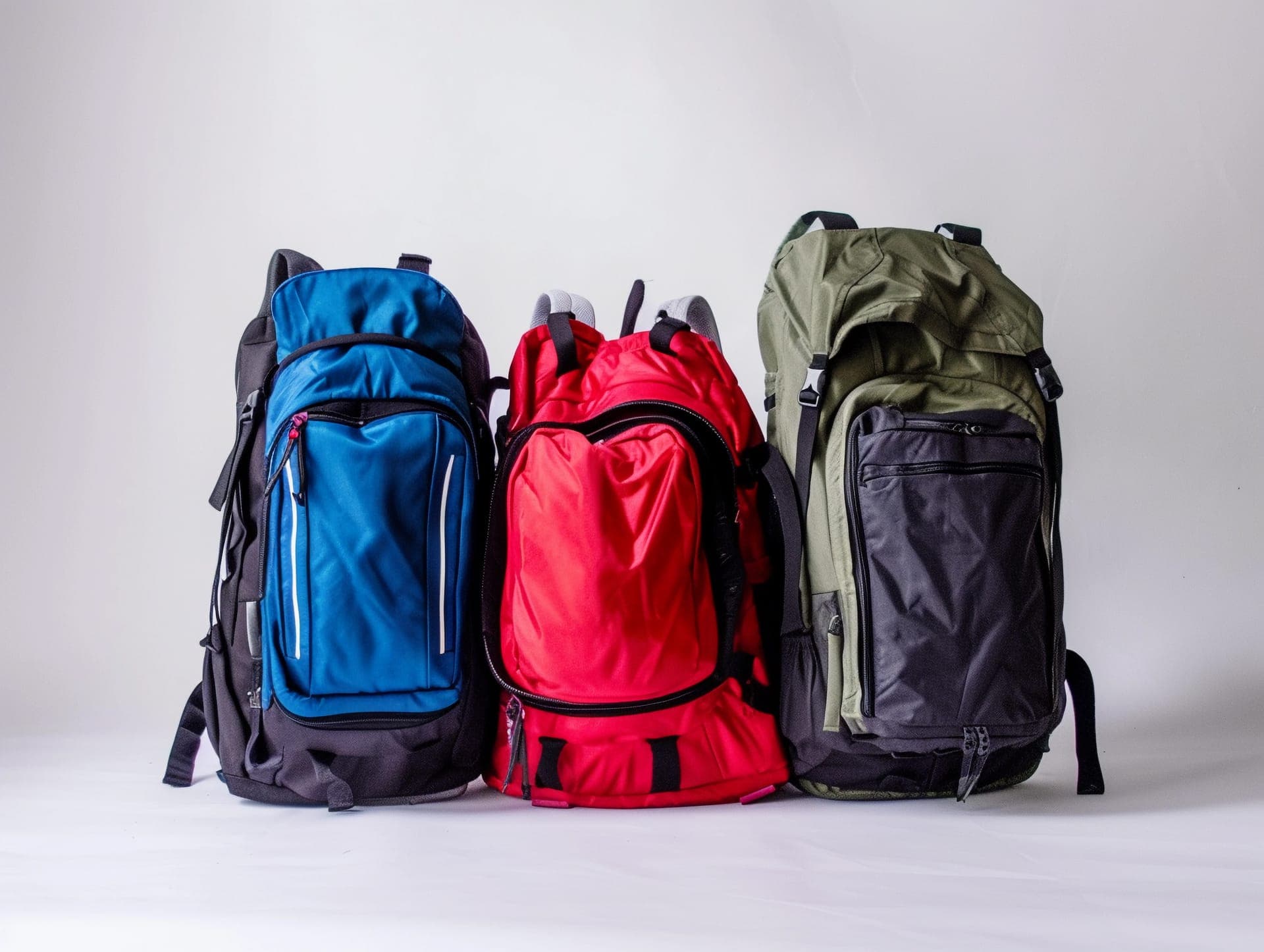
Your backpack is the thing that keeps everything together and that you carry for hours, so that is where it starts. For bushcraft you look above all at enough volume, sturdy attachment options on the outside and durable material that can handle branches and rough terrain. Those are different considerations than for an ordinary daypack. What exactly to look for in a backpack for bushcraft you can read in the overview on the bushcraft backpack. For the broader choice of size and fit we point to the guide on which backpack suits your use. You can browse the backpacks themselves in the outdoor backpacks.
Water in nature: taking it and filtering it
Water is the item you come across soonest. Sometimes you take it with you, sometimes you want to be able to top up from a source along the way. Then it is important to be able to carry water and make it fit to drink in a responsible way. How you find, carry and filter water in nature is in the overview on taking and filtering water in nature. The choice between a bottle and a water bag and how much you take we discuss in the guide on taking water on the trail. You can find the carriers and bottles in the water bottles and water carriers.
Medical and safety
However calm bushcraft is, you work outdoors with your hands and on uneven terrain. A basic first-aid kit therefore always comes along: plasters, bandages, gloves and the personal medication that you need. The aim is to handle small injuries and bridge a situation until you have professional help. What belongs in such a kit and how you choose you can read in the broader guide on medical on the trail, from first-aid kit to IFAK. You can browse the first-aid items themselves in the medical kits.
Good to know
This article is intended to be informative and educational. The medical items do not replace professional help or a first-aid course. In a real emergency, always call 112. Always work safely in nature and match your preparation to your own experience and the conditions.
Where are you allowed into nature in the Netherlands?
You do not practise bushcraft just anywhere. In the Netherlands a lot of nature is protected, and in many nature areas the rule is that you have to stay on the paths and that staying overnight, making fire or camping is not automatically allowed. The rules differ per area and per land manager, and what is allowed in one place is not allowed in another. So do not assume something is allowed, but look into it beforehand for the area you want to go to.
Because the rules around camping, staying overnight and bushcraft in nature carry a lot of nuance, we cover them in a separate overview instead of making firm statements here. What is and is not allowed and how you tackle it tidily and responsibly belongs with the rules that the land managers publish themselves. Always follow the instructions on site and the principle of leaving no trace.
A good rule of thumb for beginners: assume that in protected nature you stay on the paths and leave nothing behind, unless a land manager explicitly allows something else. Much of what belongs to bushcraft, such as practising with shelter, cordage and setting up a camp, you can perfectly well do on your own land, with friends who have a suitable piece of ground or in places specifically set up for it. That way you learn the skills without burdening nature or the rules.
The principle of leaving no trace is more than a rule; it is the heart of responsible bushcraft. Take your waste with you, do not damage plants or trees, do not disturb animals and leave a place as you found it. Whoever sticks to this keeps nature accessible for themselves and for others, and ensures that bushcraft remains a welcome pastime.
The RFG gear for bushcraft in brief
RidgeFront Gear focuses on the functional core of bushcraft: carrying, water and medical. The range is deliberately narrow and aimed at gear that proves its worth in practice, not at as many separate gadgets as possible. That way you choose based on what you actually use.
For carrying you look at the outdoor backpacks, for water and carriers at the water bottles and water carriers, and for the medical basics at the medical kits. Use the skills and the 5 Cs from this overview as a framework to determine what suits your way of doing bushcraft.
Frequently asked questions
What does bushcraft mean?
Bushcraft means practising skills to be able to stay self-reliantly in nature, such as building a shelter, making fire, making water fit to drink and orienting yourself. The emphasis is on knowledge and ability rather than on as much gear as possible. It is about being deliberate and prepared in nature, with respect for the area.
What is the difference between camping and bushcraft?
With camping you bring your comfort along, such as a tent, a mat and ready-made food, with the aim of staying. With bushcraft you use skills to get by with less and shape your stay yourself. So camping is about bringing comfort, bushcraft about self-reliance with knowledge as the basis.
What are the 5 Cs of bushcraft?
The 5 Cs are Cutting, Cover, Combustion, Container and Cordage: five functions that come up in almost every situation. They are respectively something to work with, shelter from the weather, a way to make fire, something to carry water in and cordage to build with or fasten things. The framework helps you think in functions instead of separate items.
What is the difference between bushcraft and survival?
Bushcraft is planned and practised: you deliberately choose to use skills and you have your preparation in order. Survival is about surviving an unplanned emergency in which you have to manage with very little. In bushcraft it is about being deliberately and comfortably self-reliant, while survival responds to an emergency. The skills overlap, but the intention and the preparation differ.
Do you need a lot of gear to start with bushcraft?
No. You start by practising and with a limited set that covers the most important functions: a reliable backpack, a way to carry water and make it fit to drink, shelter from the weather and a basic first-aid kit. You buy additions only once you have noticed you really miss them. That way you keep your kit light, manageable and matched to what you actually do.
What do you call someone who does bushcraft?
Someone who does bushcraft is usually called a bushcrafter. It is not a protected title or qualification; it simply describes someone who practises the skills to stay self-reliantly in nature. Whether you are just starting or have been at it for years, it is about the practice, not about a label.
Start with the basis that keeps everything together and carries it. Choose a backpack that suits what you actually take.