Out in nature, water is the item you run into soonest. It is heavy to carry, you run out of it faster than you think and you cannot top it up everywhere. That is why it is useful to know how to carry water, how to refill it from a source along the way and how to make it drinkable in a responsible way. In this overview we keep it level-headed and practical.
We first look at finding and carrying water, and then at the ways to filter and purify it. The choice between a bottle and a hydration bladder and exactly how much you bring, we deliberately leave aside here; that belongs to the general water guide we refer to at the bottom. This piece is specifically about making water from nature drinkable.
Good to know
This article is intended to be informative and educational. Water from nature can contain pathogens and contaminants that you cannot see. No method guarantees completely safe drinking water; combine methods, follow the instructions of your filter or purifier and, when in doubt, choose a more reliable source. Tailor your choices to your own situation.
Finding water in nature

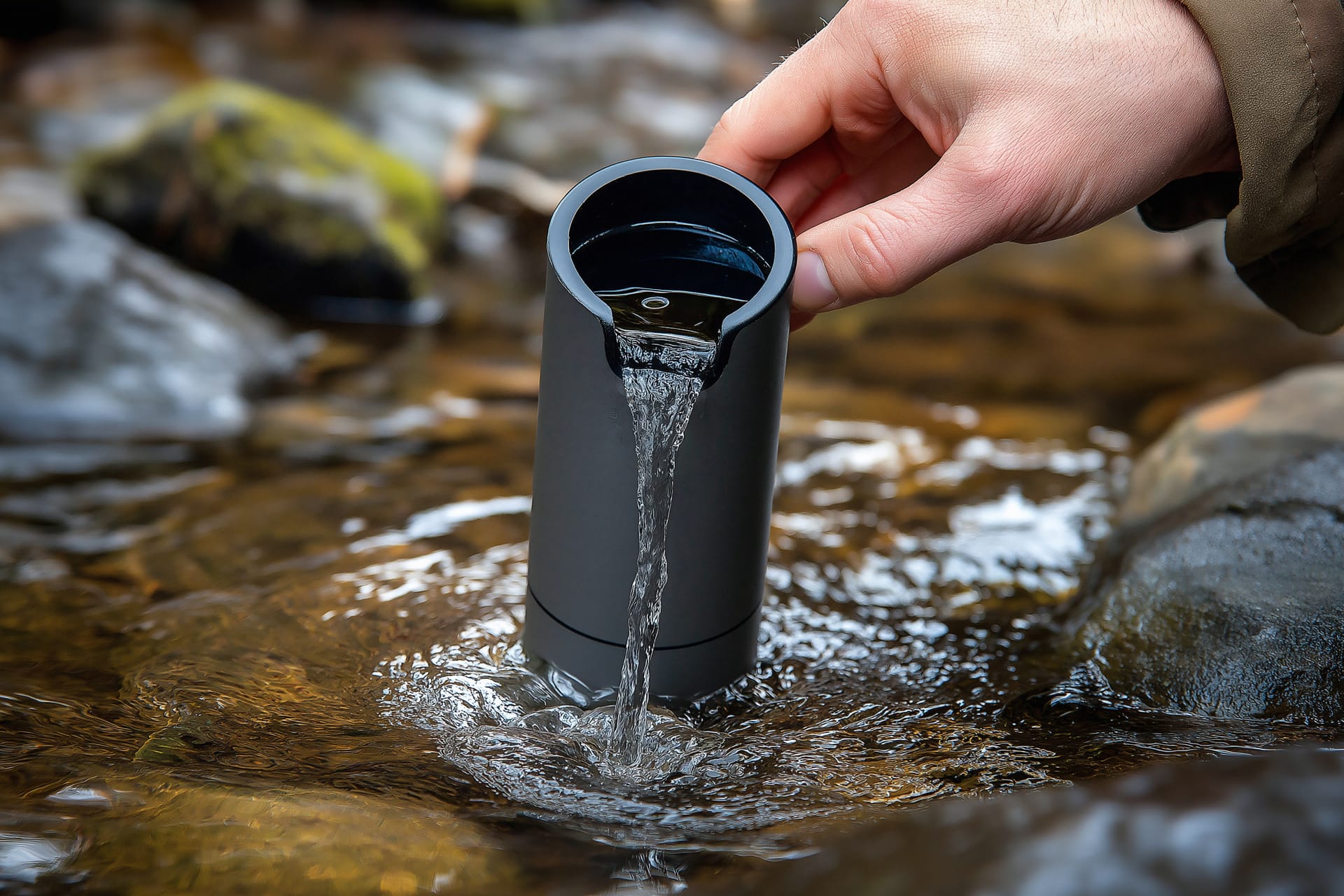
Not every water source is equally suitable. Running water from a stream or small river is usually a better choice than standing water in a pool or ditch, because standing water can contain more contamination. Clear, moving water that is not right next to a meadow or a drainage point is a wiser starting point than murky water.
Keep in mind that how water looks says nothing about what is in it. Clear water can still contain pathogens, and that is exactly why it is important to always treat water from nature before you drink it. Look for the cleanest possible source and assume that you have to filter or purify it either way.
Carrying water on the go

Water is heavy, so the way you carry it makes a difference. A sturdy bottle is practical for the amount you keep on you anyway; a foldable water carrier is handy if you want to top up along the way or carry more without constantly carrying a lot of weight. Often a combination is most convenient: a bottle for immediate use and a carrier for extra capacity.
Which size and which type suits your trip and how much water you keep on hand depends on the duration, the temperature and your effort. We discuss that trade-off in the guide about carrying water on the go. You can find the bottles and carriers themselves at the water bottles and water carriers.
Filtering water: getting the gunk out
Filtering removes suspended particles and part of the pathogens from the water. There are different ways, each with their own use:
- a pump filter, with which you can draw larger amounts of water from a source
- a bottle with a built-in filter, handy for on the go and small amounts
- a straw filter, compact and light, with which you drink directly from a source
- a simple pre-filter such as a cloth, to remove coarse dirt before you filter further
Which filter you choose depends on how much water you need and how you travel. An important point: always read what your filter does and does not work against, because not every filter removes everything. Clean your filter after use and let it dry, so it stays usable. A cloth or pre-filter extends the lifespan of your actual filter by holding back coarse dirt.
Purifying water: tackling pathogens
Purifying goes a step further than filtering and focuses on neutralising pathogens that a filter may let through. The best-known and most reliable method is bringing water to the boil; in addition there are purifying agents and methods that you use according to the instructions. A combination often works best: first filter to get the gunk out, then purify against what you cannot see.
No method gives a guarantee of completely safe water, so always follow the instructions and be careful with the source you choose. When in doubt about the quality or if you are not sure whether a method is adequate, it is wiser to bring water you trust, or to find a more reliable source. Treated water from nature is an aid, not a replacement for good preparation.
Combining filtering and purifying
In practice, a combined approach works best. Start with the cleanest possible, running source. First remove the coarse dirt with a pre-filter or cloth, then filter the water and finally purify it against pathogens. Each step tackles something different, and together they give the best result you can achieve in the field.
Remember that this combination, too, gives no absolute guarantee. The goal is to keep the risk as small as possible with the means you have on you. So make sure you know how your gear works before you need it, and practise it at home or close to home before you rely on it in nature.
Frequently asked questions
How do you make water from nature drinkable?
By filtering and purifying it. Filtering removes suspended particles and part of the pathogens; purifying, for example by bringing the water to the boil, tackles the pathogens that a filter can let through. A combination of both gives the best result. No method guarantees completely safe water, so always follow the instructions and choose the cleanest possible source.
Is filtered water from nature safe to drink?
Filtering makes water cleaner, but not automatically safe. A filter removes particles and part of the pathogens, but depending on the type may let other contaminants through. That is why you often combine filtering with purifying, such as boiling. Always read what your filter does and does not work against and be careful with the source.
Which water is best to use in nature?
Running, clear water from a stream or small river is usually a better choice than standing water in a pool or ditch, because standing water can contain more contamination. Avoid water right next to meadows or drainage points. Always treat water from nature before you drink it, because how it looks says nothing about what is in it.
Make sure you can carry water and top up along the way. Start with a bottle and a carrier.