What is a hydration bladder?
A hydration bladder, also called a hydration system or drinking system, is a flat reservoir that you carry in a separate compartment or against your back in your backpack. Through a tube with a mouthpiece over your shoulder you drink without taking the pack off. That makes it easier to take a sip in between, instead of only drinking when you are really thirsty.
The choice depends on how you move
The question is not only how much water you want to carry, but also how you drink along the way. Do you stop regularly to grab something from your bag, or do you prefer to keep moving? Is compact and simple enough for you, or do you mainly want ease during longer stretches of movement?
That is usually where the difference between a bottle and a hydration bladder lies.
When do you choose a water bottle?
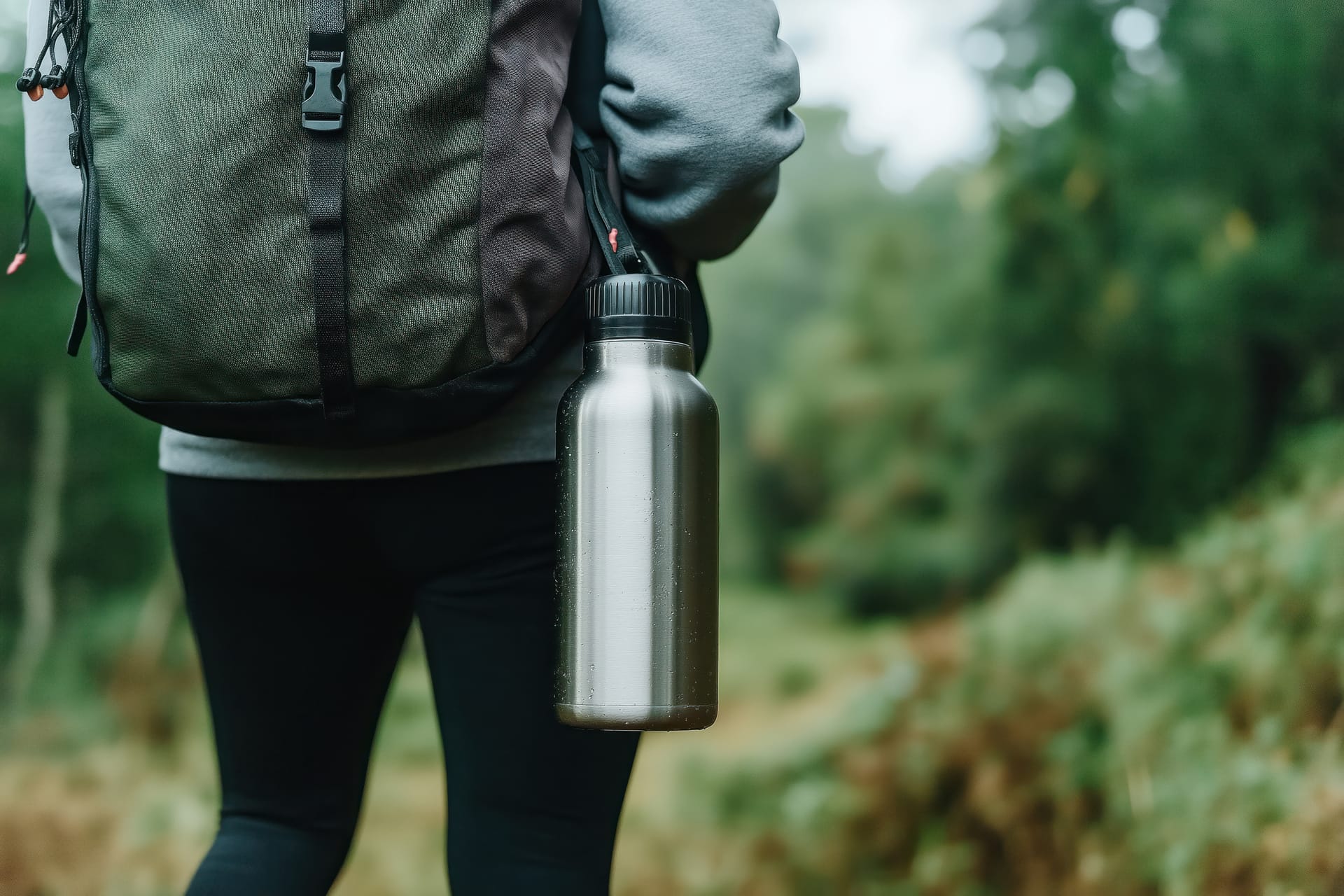
A water bottle is the most direct and straightforward solution. You fill it quickly, clean it easily and see at a glance how much water you have left.
A water bottle is especially handy when:
you are out for a shorter time
you pause regularly
you want a simple solution
you want to carry water separately from your backpack
you value flexibility
For day trips, car journeys, work, short walks and general everyday use, a water bottle is often more than enough.
When do you choose a hydration bladder?
A hydration bladder is especially handy when you want to drink easily along the way without stopping or taking off your backpack each time. That makes it appealing for longer walks, steady forward movement and situations where you want to keep your rhythm.
A hydration bladder is especially handy when:
you are out for a longer time
you want to drink while moving
you use a backpack that fits a bladder well
you want to make hydration more easily accessible
you want to keep both hands free
On longer time outdoors and active routes, that can work much more comfortably than reaching for a bottle every time.
Which suits which trip?
| Trip | Often nicer | Why |
|---|---|---|
| Short walk | bottle | simple, easy to refill, no fuss |
| Long day trip | bladder | drinking without stopping keeps the rhythm |
| Running or cycling | bladder | hands free drinking during movement |
| Camping or fixed base | bottle or jerrycan | overview of your supply |
What is more practical in use?
That depends on your preference.
Advantages of a bottle
easy to fill
easy to clean
you can see at a glance how much water you have left
usable separately from your backpack too
Advantages of a hydration bladder
drinking without stopping
better for rhythm while moving
handy on longer routes
more integration with your backpack
So there is no system that is always better. Practical is whatever works logically for your use.
What else should you watch out for?
Besides the type of system, a few practical points matter:
how much water you carry on average
how long you are out
whether your backpack is suitable for a hydration bladder
how easily you keep the system clean and usable
how important speed and accessibility are to you
A good choice is not the most extensive solution, but the one you actually keep enjoying to use.
How much water you bring depends on how long you are out, how warm it is and how demanding the effort is. Guidelines per type of trip are in how much water to bring and how to choose the size per trip.
If you go for a hydration bladder, expect a bit more maintenance than with a bottle: the reservoir, the tube and the mouthpiece stay wet. Empty it after use and let it dry well. How to do that step by step is in cleaning a hydration bladder and preventing mould.
A hydration bladder in your backpack: what to look out for
How comfortable a hydration bladder is depends largely on how it sits in your backpack. Many backpacks have a separate compartment on the back side, with an opening for the tube and a loop to hold it in place.
Let the reservoir hang flat and as close to your back as possible, so the weight of the water does not pull backwards.
Route the tube over your shoulder to the front, to a spot where you can grab the mouthpiece without searching.
Make sure you can fill and replace the reservoir without emptying the whole pack. Otherwise, in practice, you top up less often along the way.
Whether a backpack works well with a hydration bladder depends on the layout and carrying system of the pack. More on that in which backpack suits your use.
Bottle or hydration bladder: a simple rule of thumb
Choose a bottle if you value simplicity, flexibility and easy maintenance.
Choose a hydration bladder if you mainly want to be able to drink along the way without interruption.
Conclusion
Hydration on the go does not have to be complicated. The best choice is the solution that fits your rhythm, duration and way of carrying. For shorter and simpler use, a bottle is often the logical option. For longer movement and more continuous use, a hydration bladder often works more comfortably. By looking at use first, you choose a system that really works in practice sooner.
Frequently asked questions
What is better for hiking: a water bottle or a hydration bladder?
That depends on the route and your preference. For longer walks a hydration bladder is often more practical because you can drink without stopping. For shorter or simpler routes a water bottle is often enough.
Is a hydration bladder handy for a backpack?
Yes, especially if your backpack is suitable for one and you want to drink easily along the way.
Is a water bottle easier to clean?
Usually it is. A water bottle is often simpler to maintain than a hydration bladder.
When is a hydration bladder the better choice?
When you are out for a longer time and want to make your drinking moments accessible without taking off your bag.
What is a camelbag?
Camelbag is a common name for a hydration bladder: a flexible water container in your backpack with a drinking tube, so you can drink hands free while walking or cycling.
What is another name for a hydration bladder?
A hydration bladder is also called a hydration system, drinking system or camelbag. It always refers to a pouch with a drinking tube that fits in your backpack.
How long does water stay good in a hydration bladder?
Clean water that you have just filled is usually fine to drink on a trip. If water stands in the reservoir for a longer time, the taste can deteriorate and the system can start to smell. So fill it with clean water before you set off, empty the bladder after use and let it dry, and do not leave water standing for days in a closed hydration bladder.
Try it yourself
Know which way you want to go? These products match the choices above:
Hydration bladder with quick-release: a separate bladder for your own backpack, in 1.5 to 3 litres. You can disconnect the tube without the reservoir draining.
Hydration backpack with 3-litre bladder: a light backpack with the bladder built in, for hiking and cycling.
WRELS hydration vest: a close-fitting vest with a bladder for trail, marathon and cycling.
Browse our selection of water bottles and water carriers for a solution that fits your way of moving.